- Published on
Garden Bench: Where to Put One and How to Make It Last
- Authors

- Name
- Outdoor Wooden Bench
A garden bench is the only seat in the yard you have to walk to. That walk is the whole point.
Chairs sit three steps from the back door. A bench at the end of the lawn gives you a destination. A yard with a destination is a yard people walk into.
That is also why so many garden benches go unused. Six weeks after it arrives, it holds plant pots. Ours spent its first summer holding a hose instead of a person.
The placement was the problem there, not the bench. Placement and ground prep decide more than the bench itself does.
This guide covers the classic styles and eight spots where a garden bench earns its keep. It also covers the wood and iron builds worth buying, and what each price band gets you. Then there is the half hour a year of care.
For the patio version - sizes, layouts, modern designs - the patio bench guide covers that ground already. This piece is for the lawn.
The names travel, too. Listings shuffle the same words - garden bench, wooden garden bench, bench wooden garden, outdoor garden bench, outdoor benches garden benches. They all name the same seat.
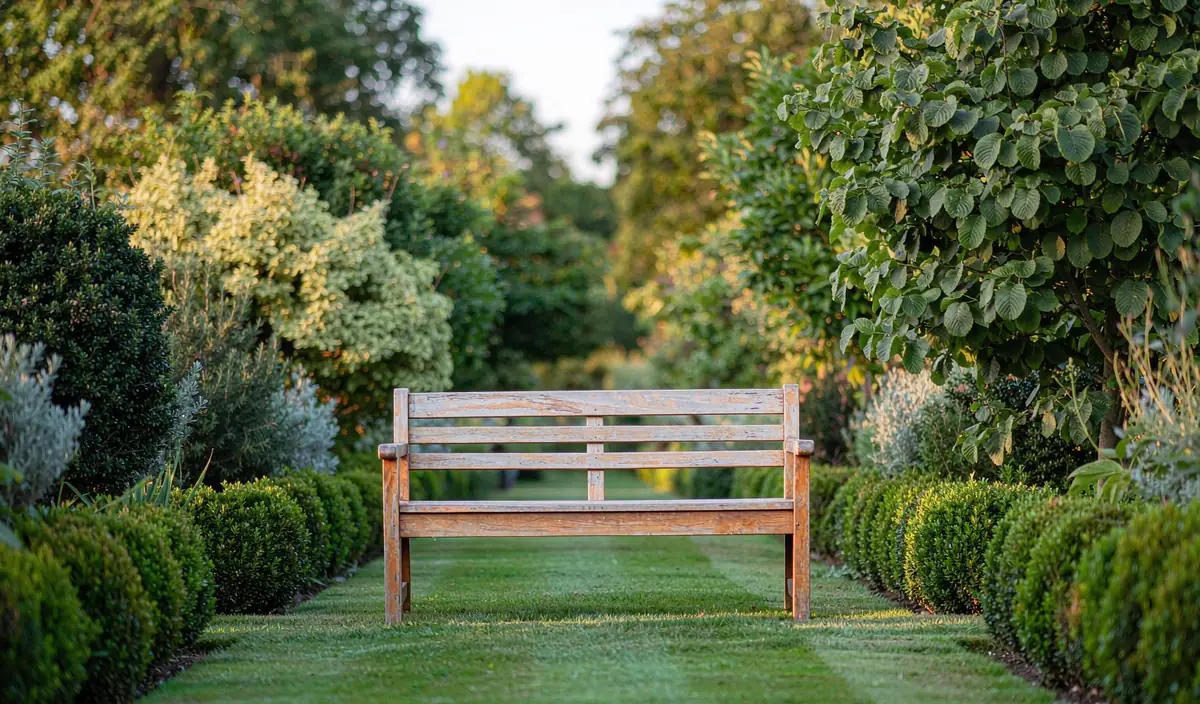
The classic styles, and who each one suits
Four shapes have survived a century of garden fashion. Which one suits your yard? Each is better at something than the other three.
The Lutyens bench. Edwin Lutyens designed it around 1900 for the gardens he made with Gertrude Jekyll. Nobody has improved on it since. Scrolled arms, an arched back, a wide flat seat.
The shape is romantic, and it needs room. Put it against a hedge or a house wall, never out in open grass.
Those wide arms hold a cup and a book nicely. The bench is heavy and expensive - worth it if the shape pleases you.
The slatted straight-back bench. Five or six horizontal slats, a straight back, plain legs. This is the public park bench stripped to essentials. It is the cheapest shape to make and the easiest to repair.
It is comfortable for twenty minutes unaided, an hour with a cushion. If your bench gets most of its use at lunchtime, this is the one.
The curved-back bench. The catalog classic of the last fifty years. A rolled top rail, a gently curved back, often cast iron ends carrying wooden slats.
The curve supports the lower back properly. Iron ends also let you replace a slat set decades later, instead of the whole bench.
The backless bench. A block or plinth with a seat and no back. In a yard it does three jobs.
A perch on a path, a low table beside a flower bed, and the strongest seat per pound.
It also suits the rougher parts of a yard. There, a backed bench starts to look like a bus stop. A plain plank on two blocks usually looks better there than scrollwork does.
Two honest notes. A bench with a back is more comfortable for a long sit. One without a back fits more places and ages better - no back joint to work loose.
And every quality level copies the Lutyens look. The shape is free. The joinery is not.
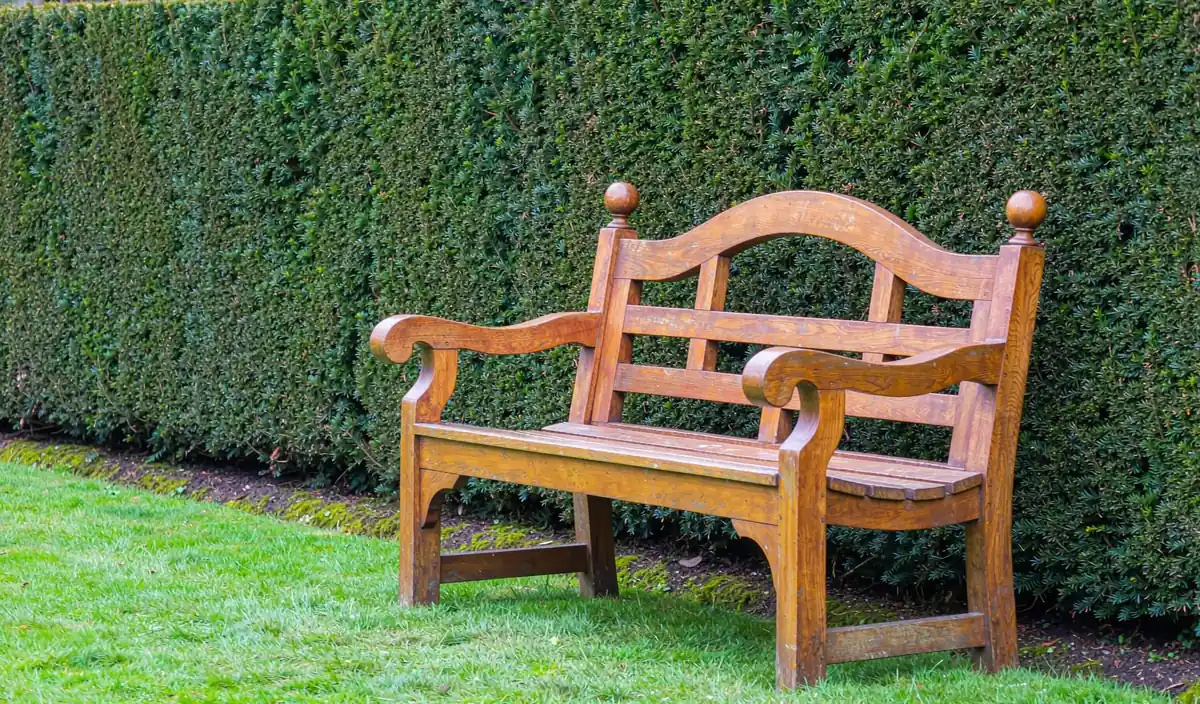
Eight places a garden bench works
So where does a bench belong? Placement decides whether it becomes furniture or scenery. These eight spots cover almost every yard, and each one has a reason.
Under a deciduous tree. Dappled shade all day, and the coolest seat on the hottest afternoon. Expect sap, bird droppings and fallen leaves, so pick a wood you can wash. Keep the bench clear of low branches.
Never under an evergreen. That gives you dry shade, resin, and a permanent litter of needles.
At the end of a path. A path needs a terminus, or it just trails off. Put a bench where the path stops, and the walk gains a destination instead of a dead end.
Facing a flower bed. This is the pure viewing seat. Sit four or five feet back, so you see the whole bed and not just the front row. Put it where you can see it from the kitchen window in winter, when the bed is bare.
Beside the vegetable patch. Every gardener ends up sitting on an upturned bucket. A bench by the far gate, near the rain barrel, gives the basket and gloves somewhere to live. It also turns a five-minute rest into a habit.
The far corner of the lawn. What most catalogs call a backyard bench, and the best single trick in a small yard. A seat in the far corner makes the yard look longer. It gives you a reason to walk its full length.
Against a south-facing wall. Brick and stone store heat and release it into the evening. That stretches the sitting season by a month at each end. A wall bench is for spring and fall afternoons.
In midsummer the wall is too hot to touch.
In the rough grass under an old fruit tree. The bench-in-the-woods feeling, scaled down to a yard. No mowing around it, a couple of pavers under the feet, long grass left to grow. This is where a plain slatted bench beats anything with a scroll on it.
By the shed or greenhouse. The working bench, and usually the most used one of the lot. Somewhere to set down a pot, kick off boots, or drink tea while seedlings harden off.
In our yard it gets more use than the flower-bed bench. It sits where the work happens.
Where not to put one. The middle of the lawn, where it becomes an island to mow around.
Full sun all day, which cooks the seat and dries the wood. And any spot you cannot see from the house, because benches you cannot see are benches you forget.
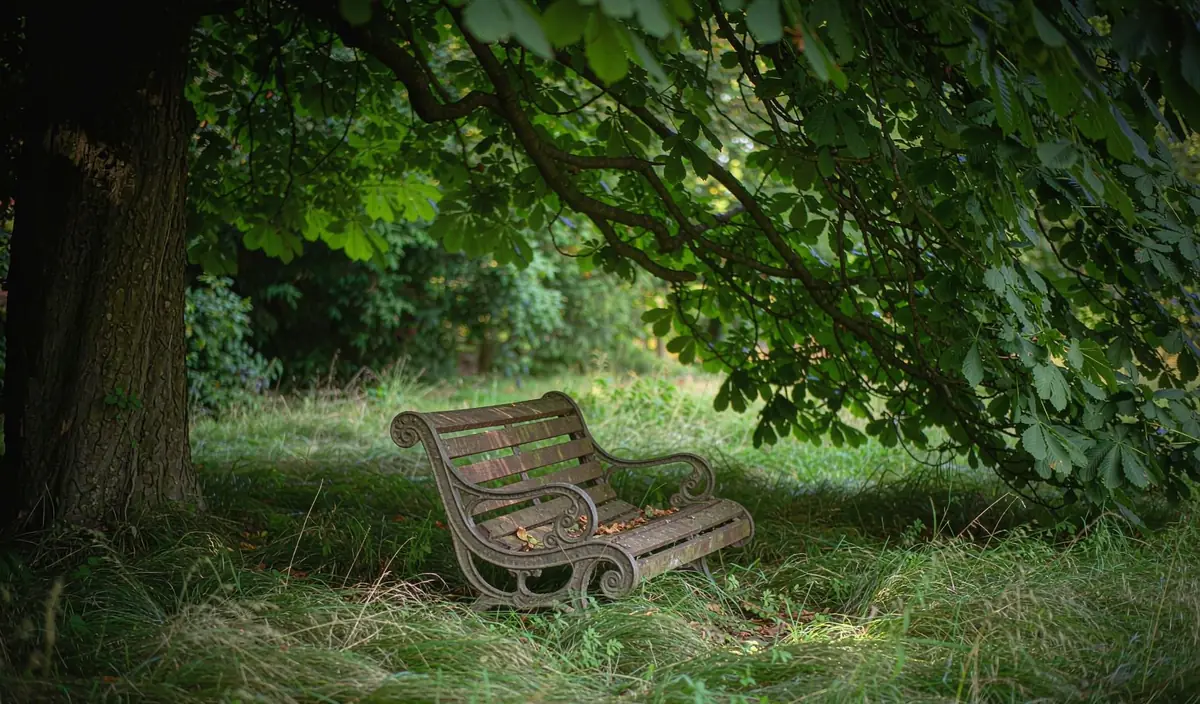
Iron and wood, in the combinations that last
Which build is still standing after twenty years? Nearly every long-lived garden bench is one of three.
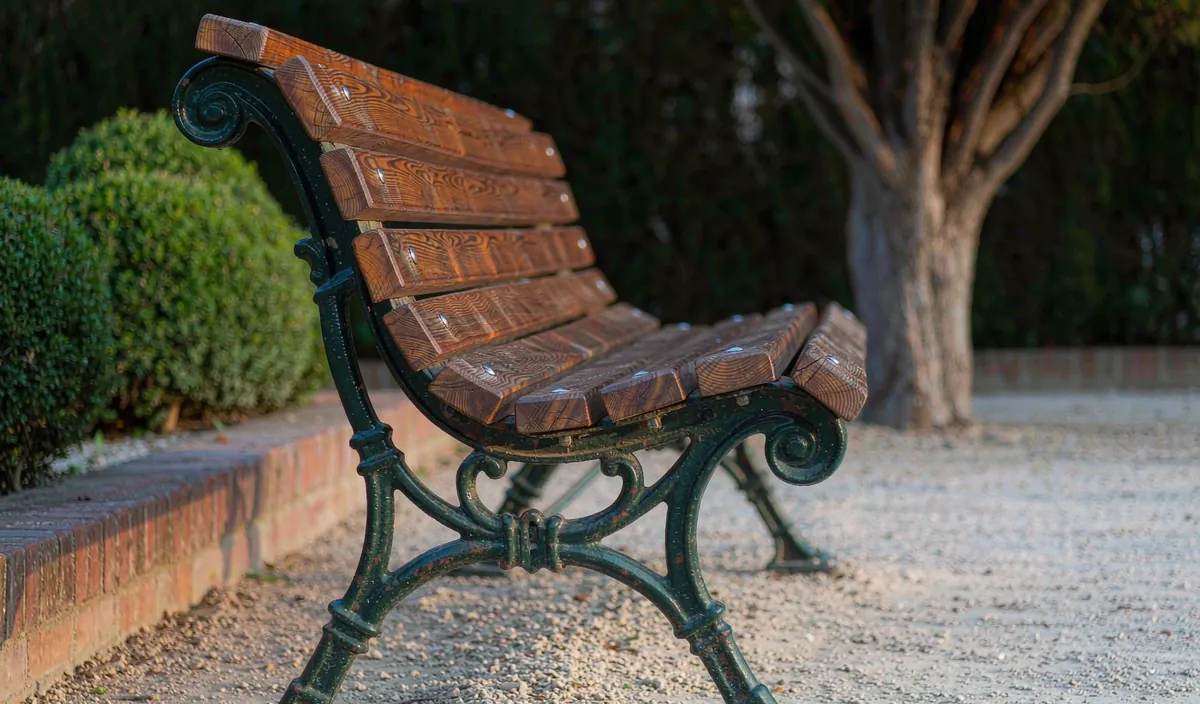
Cast iron ends with wooden slats. The classic public park build, and still the best-value route to a bench that outlives its owner.
Owners paint and repaint the iron ends while slat sets come and go. A decent pair of ends will carry three or four sets of slats across forty years.
Rust is the enemy here. Touch up chips in the fall, before the damage shows.
All-wood construction. Simpler, lighter, no rust, and repairable with a saw and a screwdriver. The trade-off is that everything rests on the wood and the joints.
Joints are where cheap benches fail first.
Metal frames with wood seats and backs. The modern version, usually powder-coated steel with oak or acacia slats. Good looking, and lighter than iron.
Check two things. Look for a baked finish rather than a spray. And the slats should bolt through the frame, not sit in hidden brackets.
Then comes the wood, which matters more than the shape on any outdoor garden bench. Kept short here, because the wood types guide compares species properly.
Three species cover almost every garden bench hardwood worth buying. Teak is still the benchmark. Thirty years outside with almost no attention, graying to silver if you let it, and priced accordingly.
Iroko is the honest substitute, and teak’s West African cousin. Similar durability, coarser grain, usually about half the money.
Oak is the classic choice - strong, handsome, heavy, and full of tannins. Those tannins leach dark stains onto light-colored pavers until you seal it.
Behind those three, black locust, eucalyptus and acacia are the value hardwoods. Pressure-treated pine belongs in a yard only if it will sit under cover.
The last material question is solid wood against composite. A solid wood bench dents, grays, and sands back to new.
A wood-composite bench never rots or splinters, but it is heavy, it moves in heat, and it fades. Once the surface goes chalky, nothing brings it back. Wood is the one you can repair.
What a wooden garden bench costs
Price tracks three things: the species, the thickness of the sections, and how the maker joins it. It tracks the brand far less than the catalogs want you to think.
| Band (USD) | What the money buys | Likely life | Upkeep |
|---|---|---|---|
| Under $250 | Thin slats, screws driven straight into end grain, softwood or young acacia | 3 to 6 years | Oil yearly, expect to replace it |
| $300 to $750 | 3/4 to 1 inch slats, bolted or mortised joints, iroko or acacia | 8 to 15 years | One oiling a year |
| $900 and up | 1-1/2 inch teak or iroko, cast iron ends, proper joinery | 20 to 30 years | Almost none in teak, oil the rest |
The jump from the middle band to the top is mostly thickness. Thickness buys the years. Nothing else on the invoice comes close.
The used market is the best-value route into a proper bench. A bench with good cast iron ends and rotten slats sells for little. Re-slat it in iroko, and it outlasts anything in the budget band.
A set of iroko slats runs around $110, against $900 and up for the same bench new. That is the bench I would buy myself, tbh.
If you would rather compare finished benches, start with the picking guide. It walks through the joinery and hardware worth checking before you pay.
Ground prep, where most benches fail
A bench that wobbles is a bench dying. Rocking twists the frame every time somebody sits down. Twisting opens the joints long before the wood gives up.
Most outdoor benches die at the feet, not in the seat. Every wobbly bench I have seen told the same story. One foot on soft ground, and a frame that had been twisting for a year.
Leveling the ground is not fussiness. It is the cheapest way to add years to the bench.
Level first. Four feet, one plane. On a slope, dig out the high side rather than packing up the low one.
Give it a base. On grass a bench sinks, and the feet stay wet all winter.
A pad of gravel or two level pavers keeps the legs out of the soil. Make it about six inches wider than the bench.
Break the contact with the ground. Rubber feet or pads under the legs stop end grain from wicking water up out of a damp slab. End grain is a bundle of straws. It will pull water a surprising distance into a leg.
Decide whether to anchor it. In an exposed yard a light bench blows over, and the joints take the fall. If it lives on a slab, a couple of stainless brackets will hold it.
Fix them into the slab, never through the wooden feet. Through the feet, they trap water against the wood.
Leave a gap for air. If the bench sits against a wall, keep an inch or two behind the back rail. A bench pressed flat against brick stays damp on the hidden face. That is where rot starts.
The half hour a year that keeps it alive
Gray is not damage. Sunlight breaks down lignin at the surface, and the wood turns silver.
That is a stable, protective color, not the start of rot. No oil will undo it once it has happened.
Decide in the first year whether you are keeping the color or letting it go silver. Drifting between the two is what looks neglected.
Spring, thirty minutes. Wash with warm soapy water and a stiff brush, then let it dry fully. One thin coat of oil on everything except teak - wipe it off before it turns tacky.
End grain and feet get a second coat. The per-species version is in the wood types guide.
Fall, ten minutes. Clear leaves off the seat. A wet mat of leaves left for a month stains the wood and holds damp against it. While you are there, check the hardware, since a dry summer loosens screws.
Winter. Hardwood does not need a cover. A plastic one can be worse than nothing, because it traps condensation.
A breathable cover or a sheltered spot is enough. Pads under the feet matter more than anything on top.
Near the coast. Rinse the hardware every month or two. Salt spray ruins screws and bolts long before it troubles teak.
The honest version of care: a garden bench asks for less attention than a lawn and gives back more. Most of what kills benches is a wobble at the feet and a wet leaf mat nobody noticed.
Questions people ask
What is the best wood for a garden bench?
Teak if the budget stretches, and iroko as the sensible middle.
Oak if you want the weight and the color, and you will seal it. Pressure-treated pine only under cover.
How long should a wooden garden bench last?
Pressure-treated lumber, three to six years. Iroko or oak, ten to twenty, and teak thirty and counting. The gap is almost all about thickness and joints.
Should I bolt my bench to the ground?
Only in an exposed yard, and only through the slab or a paver. Never through the wooden feet, which trap water in the leg.
Do garden benches need cushions?
Slatted benches are fine for a short sit. For an afternoon of reading, one cushion per person turns twenty minutes into two hours. Store them dry, because a damp cushion is worse for a bench than rain.
Can a wooden bench stay out all winter?
Yes. Hardwood, uncovered, with an air gap under the feet. Freeze-thaw does the damage, not rain, and it happens wherever water sits.
Can I put a bench on grass?
Yes, with a base under it. Left on bare soil the legs sink and the end grain stays wet, which is the condition rot wants. Move it once a season, or give it a pad of gravel.
Is a wooden bench too heavy to move?
A three-seat teak bench is a two-person lift. If you want to chase the sun around the yard, buy smaller, or choose cedar and accept the dents.
The short version
A garden bench is the cheapest way to get your yard used. Put it where the view is. Level the ground beneath it.
Then pick a wood you are willing to look after, or pay for teak and skip the looking after entirely.
If you would rather start from a shortlist, best outdoor wooden benches by use case is the quicker route.
Everything else about a bench is decoration.