- Published on
Patio Bench Guide: Sizes, Materials and Layouts That Actually Work
- Authors

- Name
- Outdoor Wooden Bench
A patio bench is the seat people use without deciding to. Chairs take planning. You drag one across the flags, turn it to face the view, and commit to sitting.
A bench is just there when you walk out with two coffees. That is most of its charm.
The bench at our back door holds shopping bags all week. It holds a watering can too. On Sunday mornings, it holds two coffees and one reader.
It is also the piece people get wrong most often. Make it too shallow, and two people sit like strangers on a train platform.
Make it too low, and every get-up becomes a small performance on the chair arm beside it. Put it too far from the action, and it quietly becomes an expensive plant table.
None of that is a money problem. An outdoor wooden bench works or fails on about six numbers. One honest look at your patio covers much of the rest, and so does a wood choice you can live with.
This guide goes through all three. It stays light on species detail on purpose.
The wood types guide already compares teak, cedar, acacia, eucalyptus and pine. So this piece spends its space on the things most listings never tell you.
What counts as a patio bench
Shops attach the phrase to four different pieces of furniture. Knowing which one you are shopping for settles half the decisions up front. Nearly all patio benches for outdoors fall into one of these shapes.
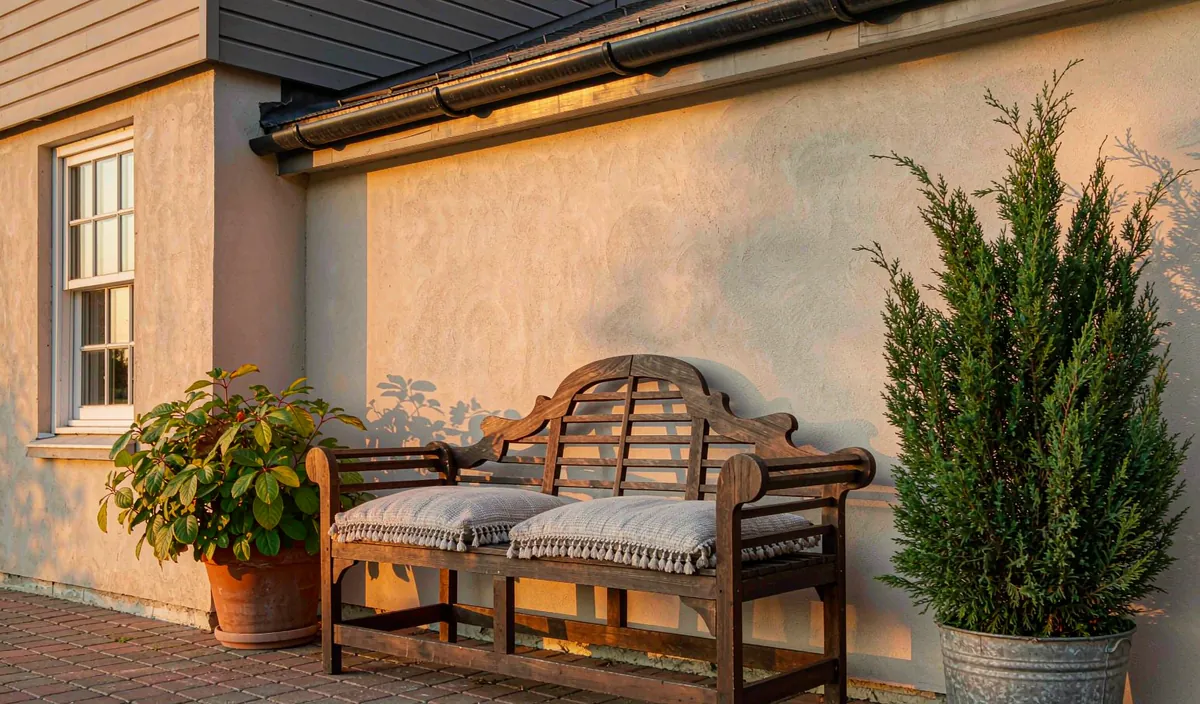
The classic backed bench. A seat four to five feet long, with a back and often arms. It anchors a wall or frames a view. It earns its keep as the patio’s best seat for sitting still - for reading, not eating.
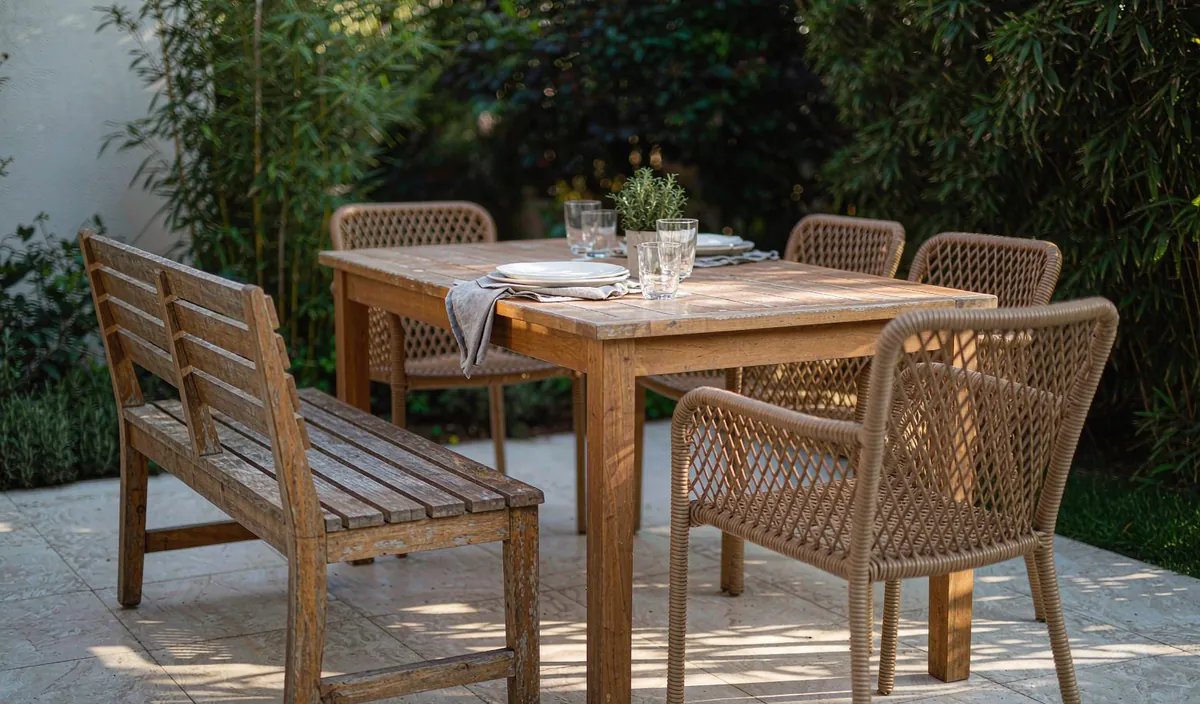
The backless bench. A wooden seat on legs or a plinth. It tucks fully under a dining table. When the table is idle, it doubles as a side surface for drinks and plant pots.
With no back to catch the eye, it makes small patios look bigger, not smaller.
The corner bench. The L-shaped answer to outdoor dining. You build it into the decking, or you buy it as a set. It seats more people per square foot than anything else, and it never needs moving.
The cost is flexibility. Commit to the corner, and the patio plans itself around it.
The storage bench. A seat with a lid. It is useful, but most fail early for one reason. Ventilation, not rain.
The patio storage bench guide covers that in full.
Choose by what the bench must do, not by looks first. A dining bench that also wants a back is a contradiction.
A view bench without a back is a disappointment. You will keep apologizing for it with cushions. Everything below applies to all four types, with notes where they differ.
The six numbers that decide comfort
Sit on three wooden benches in a row. The differences stop being subtle. These numbers decide how an outdoor bench seat feels, in roughly this order.
Seat height: 18 inches. Anything from 17 to 19 works. Below 16, and knees sit above hips. Above 20, and most guests’ feet dangle.
If the bench shares a table with dining chairs, match their seat height within an inch. Mixed heights are the thing people notice and never mention.
Seat depth: 18 to 20 inches. Under 16, and you are perching on a shelf. Over 22, and people slouch at a strange angle, or build a cushion nest behind themselves.
Dining wants the shallower end. Reading wants the deeper one.
Width: 24 inches per adult. Does that sound generous? Sit three adults on a four-foot bench and ask again.
Four feet seats two grown-ups snugly. That is fine for a couple who like each other. Five feet is comfortable for two, and negotiable for three.
Six feet seats three properly. It is also the length where a bench starts to look intentional, not apologetic.
| Bench length | Adults | Best for |
|---|---|---|
| 4 ft | 2, snug | Couples, small patios, entry spots |
| 5 ft | 2 comfortable | Most patios - the sensible default |
| 6 ft | 3 | Families, dining tables 60 inches plus |
| 8 ft | 4 | A statement; two shorter benches usually work better |
Backrest angle: 95 to 105 degrees. Dead vertical looks tidy in photos. Ten minutes in, it feels rigid. Past about 110, you are reclining, and that only makes sense with a footrest.
Dining benches want to stay near 95. Lounging benches can lean back a little.
Arms: 7 to 9 inches above the seat. Optional, and the first thing cut to save space. Arms are what an older guest presses down on to stand up.
If anyone in the house is over seventy, take the arms and thank yourself later.
A softened front edge. This is the spec almost no listing shows. A sharp seat edge presses into thighs, numbs legs, and shortens every sit.
Run a hand along the front slat of any bench for outside use. Look for a rounded edge, or at least an eased one.
Two habits worth stealing before you buy. Measure the seat between the arms, not the headline length.
Add your cushion height to the seat height too. Two inches of foam will eat the 18-inch number you were matching.
Why wood patio benches beat resin and metal
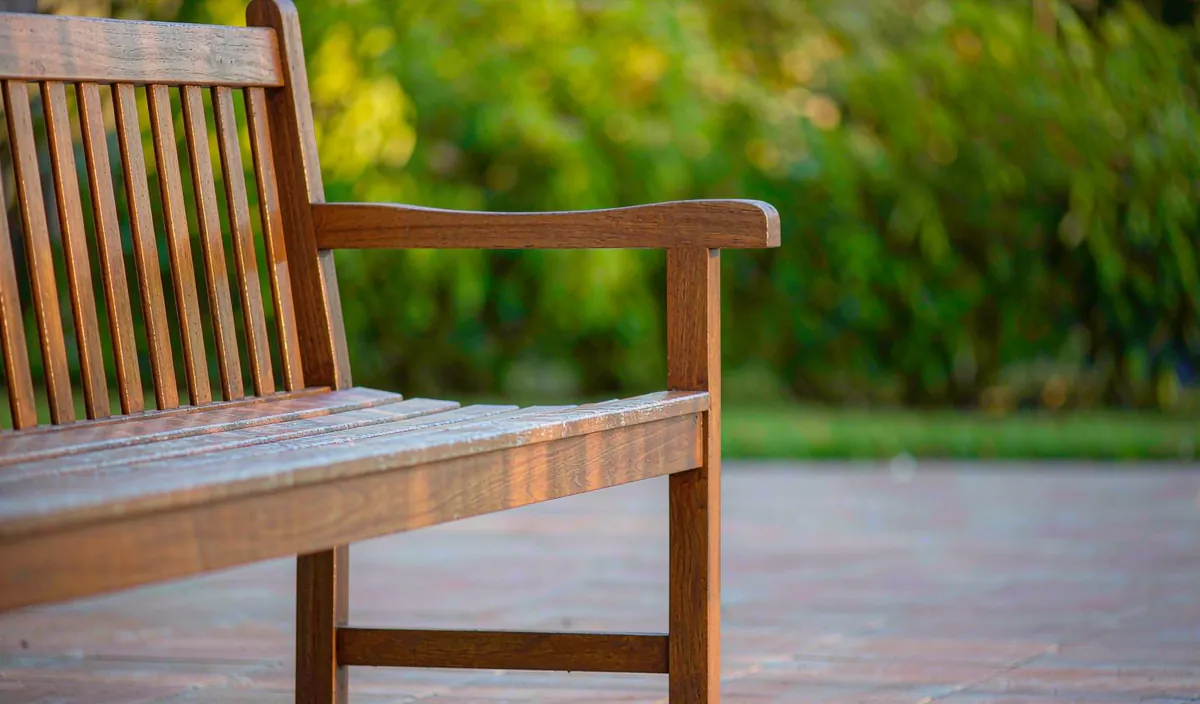
Wood wins the patio on bare skin. That is the whole argument.
Outdoor furniture has to survive three tests indoor furniture never meets. Sun, rain cycles, and bare skin. The third one decides what people sit on.
Ever sat on a metal bench in July? Steel and aluminum in direct sun pass 140°F without drama. Touch a metal outdoor bench at two in the afternoon and the decision makes itself.
Paint slows it for a season or two, then chips. Wood bench slats in the same sun stay touchable all day. It is why a park bench keeps wooden slats even after its frame goes metal.
Resin and plastic start cheap and comfortable. Then they fail quietly. Ultraviolet light makes them brittle year after year.
Five summers in, the seat flexes and the color goes chalky. Nothing brings it back - no sanding, no oil, no repair.
Light weight is the other tell. When a bench skitters across the pavers in a breeze, you know what you are sitting on.
Wood’s honest costs are weight and one maintenance afternoon a year. A solid wood bench takes two people to move, and even cedar is not furniture you flick about.
In exchange, a scratch sands out and a wobble tightens up. A tired surface oils back to life. The seat never needs a towel before someone sits on it.
Species choice matters more for maintenance than for comfort. The short version fits in one line.
Teak if you never want to think about it. Cedar if you want light and cool, and you accept dents.
Acacia for hardwood looks on a softwood budget, with a real oiling commitment. Treated pine only under cover.
The full comparison - lifespans, costs, climates - lives in the wood types guide.
One more thing from the factory side of this trade. In the mid-range orders I see, acacia comes up again and again. Teak only appears when the budget doubles.
One argument rarely made: rust. Ordinary hardware bleeds orange streaks onto light-colored pavers. On a patio, that staining is permanent.
Whatever the material, insist on stainless or hot-dip galvanized hardware. An exterior bench is only as tidy as its bolts.
Where a bench on the patio goes
So where does a bench work best? Against the house wall, long side out.
Placement decides whether patio benches become furniture or scenery. Four placements cover almost every patio ever built.
Against the house wall, long side out. The default, and the best first choice. Leave 12 to 18 inches of air in front of the seat, for knees and for people walking past.
A cushion or two against the wall softens it. A light above makes it the evening seat.
Tucked under the dining table. The backless bench’s home ground. Want 10 inches or more of clear space between the tabletop apron and the seat.
The bench should slide out without catching, so check the feet as well as the fit. With a pedestal table, a longer bench can seat three.
Facing the view, out in the open. Set a backed bench against the open edge of the patio. Give it a view over the garden, and it becomes the second most-used seat in the house.
Its enemy is foot traffic. Nobody relaxes on a bench people walk behind, so give it three feet of clear depth.
Around the fire pit. Two short benches facing each other beat one long one. Everything wants at least three feet from the heat.
Wood does not mind a gas fire table’s warmth. It does mind open embers, so use a spark screen or keep your distance.
A bench light enough to carry with one hand suits this arrangement, because the seating moves with the sun. The Amazonia Aster review covers a 53-inch eucalyptus seat at 25 pounds.
Mixed seating works when heights agree. A bench plus two armchairs is the friendliest arrangement there is. The bench holds the family while the chairs rotate with the sun.
Keep every seat within an inch of the same height, or the arrangement reads as accidental.
On small patios, one good bench beats four chairs every time, tbh. Four chairs eat the space, visually and physically.
A bench against the wall leaves the middle open for living. That is the single highest-value swap in small patio design.
A balcony or a porch needs a smaller bench again. The small wooden bench guide covers that end of the range.
The bench-patio relationship only breaks in one case. You shove the bench into a corner nobody walks to. Treat it as seating, not storage.
A note on the listings you will meet. Retailers shuffle the same words endlessly. Outdoor bench, bench on patio, bench patio, outdoor patio bench, bench designs outdoor, exterior wood bench, benches outdoor patio seating.
There are only so many ways to name one piece of furniture. Judge the six numbers above, not the label.
Modern outdoor bench designs, and what to check
The last few years have been kind to the wooden bench. If you only know the scrolled-arm catalog pieces, the current generation looks like different furniture.
Wide slats, deep gaps. Narrow slats look busy and hold crumbs. Wide slats - three to five inches - with clean gaps look architectural. They also shed rain faster.
The wide look is the modern one.
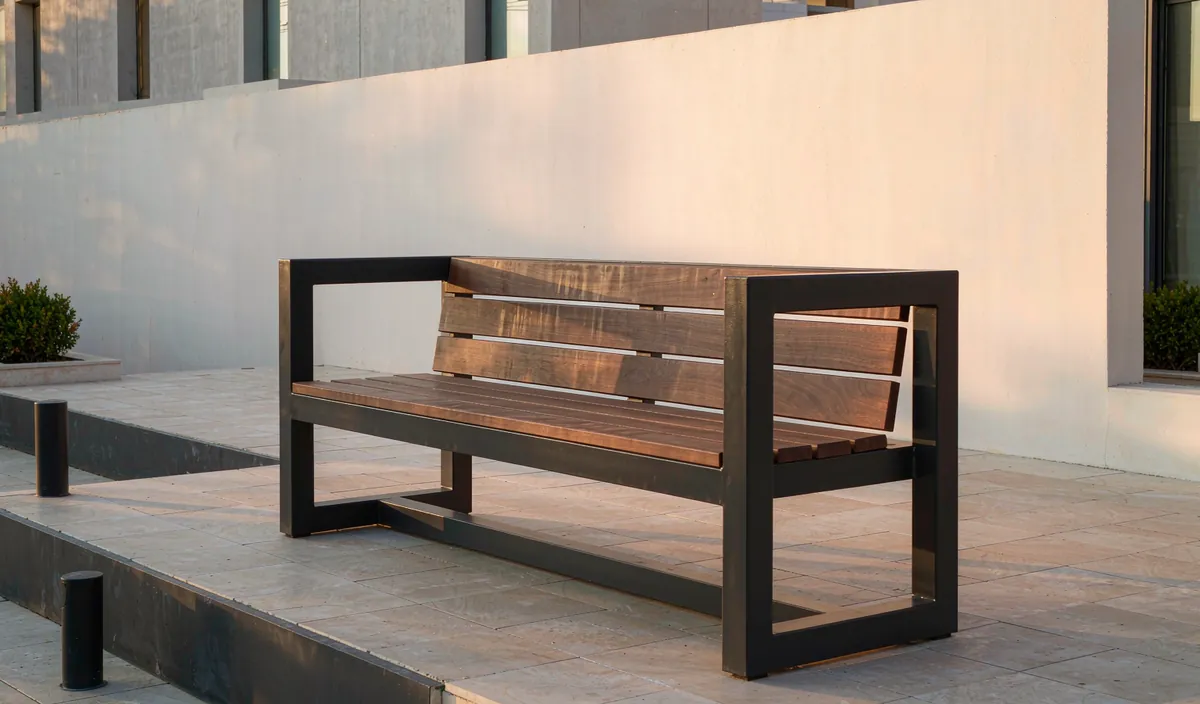
Black steel frames with wood seats. This is the current classic of modern outdoor bench design. Powder-coated steel does the structure. Wood does the touching.
It suits nearly every paver color, and it ages well. Just check two things.
The coating should be a baked powder coat, not spray paint. And the slats should bolt through the frame, not sit in hidden brackets.
Soft geometry. Curved back rails, rounded corners, seats that appear to float. All of it works in wood. None of it excuses thin sections.
A floating seat still needs an inch of slat. A curved back still wants that 95-to-105-degree angle.
Two honest cautions. Flat, wide slats need a slight fall. Without it, they hold puddles. Check that photos show gaps, not one solid plane.
And “modern” is not a license for mystery materials. Plenty of design-forward pieces are thin acacia veneer over softwood. That veneer often checks and peels within two seasons.
The simpler the design, the closer you should look. A bad joint has nowhere to hide.
One trend worth stealing even if you buy classic. Leave the wood to silver. A uniform gray bench against black steel and green foliage is the most modern thing on any patio.
It costs nothing. Just choose gray or gold before the first spring. Halfway to both is what looks tired.
Caring for it, by exposure
How much work a bench asks depends almost entirely on what reaches it.
Under a covered patio: dust, and an occasional wash with soapy water. Even pine behaves here. Teak needs nothing at all.
One coat of oil a year is a polish, not a chore.
Open to the sky: the standard routine. Wash in spring and let it dry fully. One thin coat of penetrating oil goes on everything except teak - wipe it off before it turns tacky.
End grain and feet get a second coat, because that is where water gets in. The per-species version is in the wood types guide.
Beside a lawn or sprinkler line: the silent killer. An irrigator that soaks the bench twice a day is raining on it on schedule. It does not matter what wood you chose.
Move the bench or re-aim the head. No oil outruns a sprinkler.
Winter: a breathable cover or a shelter. Pads under the feet stop meltwater from soaking into the end grain. Freeze-thaw kills more benches than rain does.
One bench I ignored for two years needed one afternoon to come back - wash, brighten, oil. The wood was fine. The neglect did the only real damage.
Questions people ask
How high should a patio bench seat be?
Eighteen inches is the number; 17 to 19 is the workable band. Match the dining chairs if the bench sits at a table.
How long should a bench be for four people?
Eight feet - which is why almost nobody does it. Four people do better with a six-foot bench plus a chair, or two four-foot benches facing each other.
Can a wooden bench stay outside all winter?
Yes, covered or sheltered, and teak or cedar shrug off winter almost unaided. Treated pine suffers most from freeze-thaw cycles.
Are cushions worth it on a wood bench?
For dining, no - they slide and hold damp. For a lounging bench against a wall, one deep cushion per person turns minutes into an hour. Store them dry.
What is the lowest-maintenance wood for a patio bench?
Teak, and it is not close. Eucalyptus is the value pick with one oiling a year. Cedar, if you move the bench around often.
The 60-second checklist
Seat height. 18 inches.
Depth. 18 to 20 inches.
Width per adult. 24 inches.
Slats. An inch thick.
Hardware. Stainless or galvanized.
Front edge. Rounded, or at least eased.
Arms. Only if anyone in the house is older.
Placement. Fifteen inches of knee room, out of the sprinkler line.
A day-one decision. Oil it or let it go gray. Either is fine. Half-doing both is what looks tired.
A bench chosen on those numbers is the one piece a patio cannot do without. To judge any finished bench before you spend, the picking guide goes deeper. It covers joinery, hardware, and the three specs that predict lifespan.