- Published on
Outdoor Bench Covers: Measuring, Fabric and the Mold Trap
- Authors

- Name
- Outdoor Wooden Bench
Most covers fail in the first winter. Not because the fabric is cheap, but because the size is wrong.
A cover that fits badly flaps in wind, leaks at the seams and traps damp against the wood. The bench ends up worse than it would have been bare.
Two numbers and one fabric choice decide almost everything. All three are easy to get right before you buy.
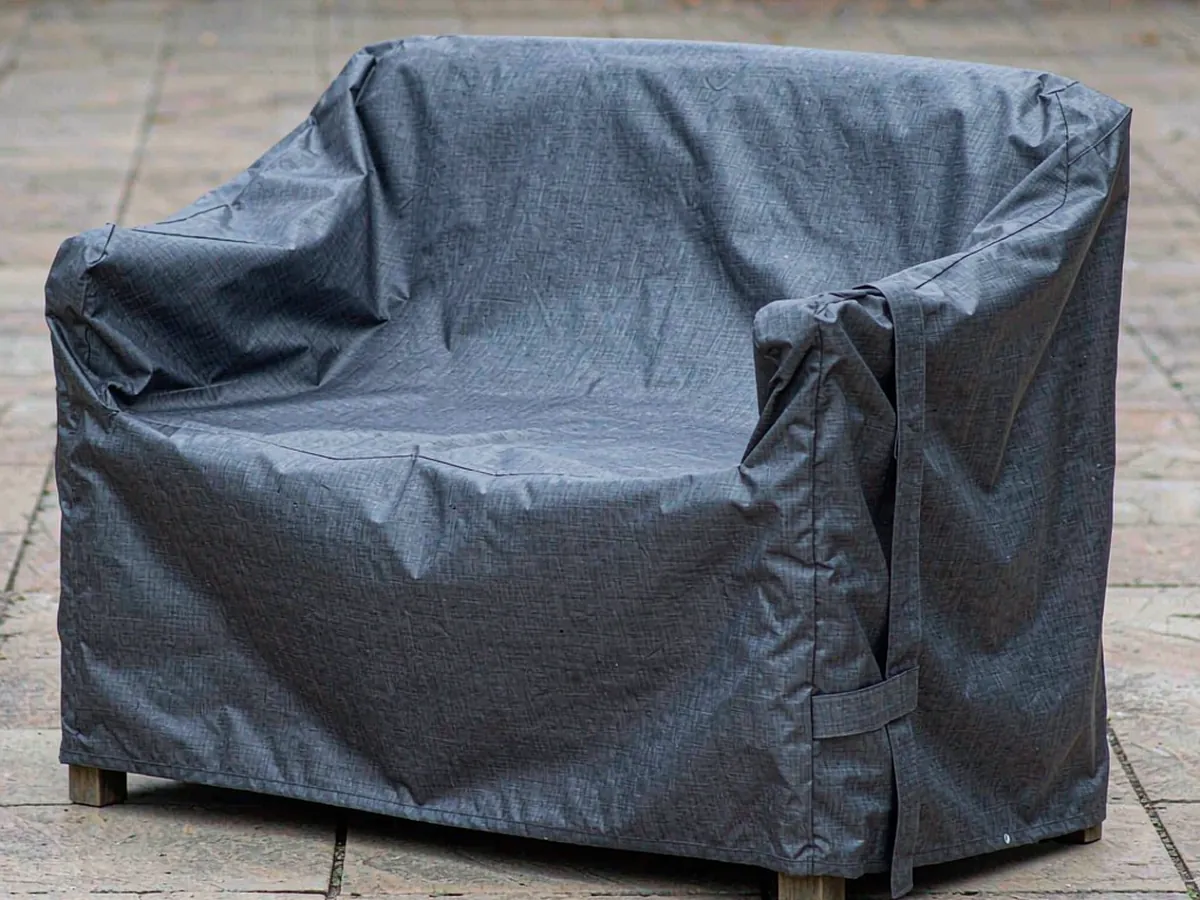
What a cover can and cannot do
A cover keeps rain off the seat. It stops bird droppings, leaf tannin and snow from sitting in the joints. It also slows the UV that turns wood gray.
That is the whole list. A cover is a raincoat, not a dehumidifier.
It cannot dry a wet bench. It cannot stop wood from swelling and shrinking with the seasons.
It can make things worse. A cover that seals damp in makes a warm, still pocket where mildew grows all winter.
The distinction matters when you shop. Sellers promise waterproofing. What the bench needs is rain off the outside and vapor out of the inside.
Measure the bench, not the seat
A seat measurement gives you a cover that stops at knee height. Water runs off it and straight down into the legs.
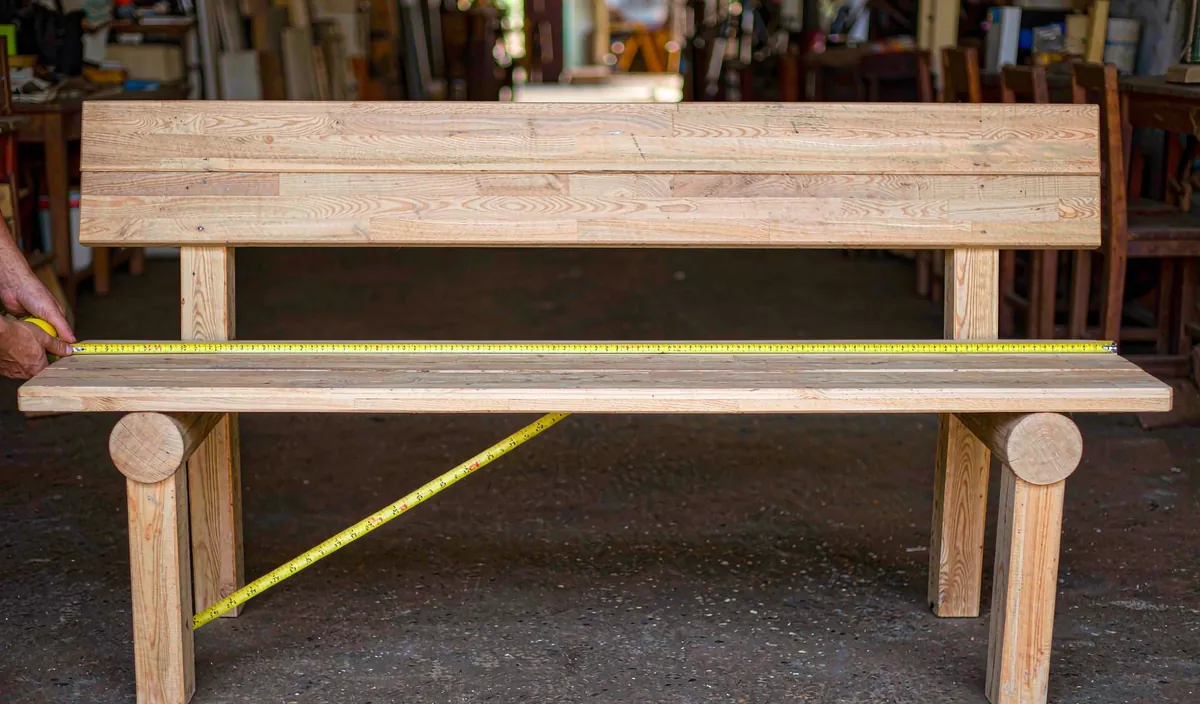
Measure the overall length, arm to arm or leg to leg. Then the overall depth, front to back. Then the height from the floor to the highest point of the back.
Some backs lean. Take the depth at the widest point, which is usually the top of the back.
Write the three numbers down. Every size chart below runs on them.
A bench under a roof still needs the height. Wind drives rain sideways more often than people expect.
Put the tape on the widest part of the bench, not the part you sit on. The cover has to clear the arms.
If you are still choosing the bench, the size guide has the standard numbers for six types.
The size chart problem
Listings sell covers for a 5-foot bench. The cover inside the box is often 58 inches long and 25 inches high.
A 5-foot bench with arms measures 66 inches across. That cover does not fit.
Ignore the bench-size claim on the label. Read the flat dimensions and compare them to your three numbers.
| Bench | Cover length | Cover depth | Cover height |
|---|---|---|---|
| 36 inches, backless | 40 to 44 | 20 to 24 | 28 to 32 |
| 48 inches, with back | 54 to 58 | 26 to 30 | 32 to 36 |
| 60 inches, with back | 66 to 70 | 26 to 30 | 32 to 36 |
| 72 inches, with back | 78 to 82 | 26 to 30 | 34 to 38 |
Give yourself two to four inches of slack on each side. A cover that fits like a skin pulls its seams apart when wind gets under it.
A cover that hangs to the ground seals the bench in. Leave a hand’s width of air at the hem.
A backless bench takes a shorter cover, and a storage bench shorter again. Neither has a back to clear.
Breathable beats waterproof
Waterproof is the wrong headline. A fabric that blocks rain and blocks vapor makes a greenhouse.
Condensation forms on the inside face when a warm day follows a cold night. The water drips onto the seat and stays there.
Picture a plastic sheet over a bench for a week. The wood underneath comes out darker, softer and smelling of cellar.
Vents solve this. One mesh panel near the top lets vapor escape while rain runs off the outside.
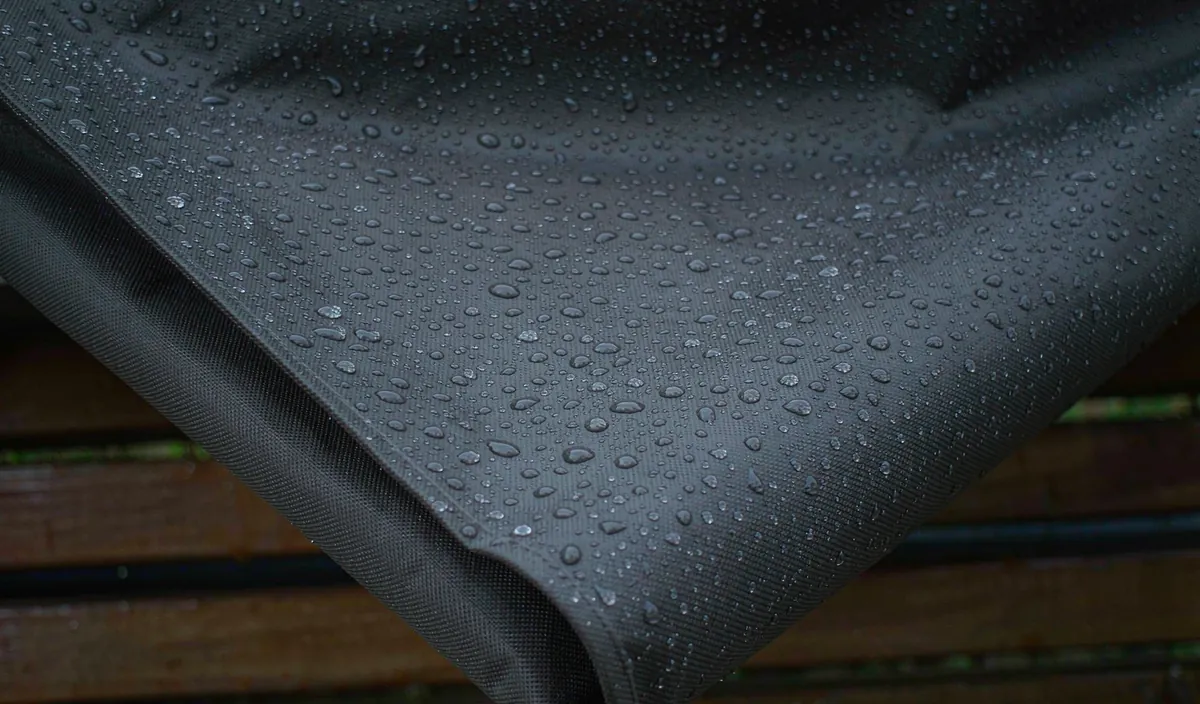
Fabric ratings help here. A waterproof figure in millimeters tells you how much water pressure the cloth holds back.
A breathability figure in grams tells you how much vapor passes through in a day. Above 2000 grams is decent.
Most cheap covers publish neither number. Treat that silence as an answer.
Fabric weights, in plain terms
Denier measures yarn thickness. 600D polyester is the standard cover fabric, and it does the job.
300D is lighter and thinner. It hangs well, tears sooner, and belongs on a bench under a roof.
900D and 1200D are heavier and stiffer. They resist abrasion from branches and pets, and they feel like canvas.
| Fabric | Water resistance | Breathability | Expected life |
|---|---|---|---|
| 300D polyester, PU coated | Light rain | Poor without vents | 1 to 2 seasons |
| 600D polyester, PU coated | Heavy rain | Poor without vents | 2 to 3 seasons |
| 900D with vents and taped seams | Heavy rain | Fair | 3 to 5 seasons |
| Waxed canvas | Moderate | Good | 3 to 5 seasons, with re-waxing |
The coating matters more than the denier. PU coating flexes and stays soft in cold. PVC coating cracks at freezing and sheds flakes onto the wood.
Look for a PU coating, taped seams and at least one vent. That combination beats a heavier fabric without them.
Vents, seams and what fails first
Things fail in a predictable order. The seams go first, then the zipper, then the coating, then the cloth itself.
An unsealed seam leaks along the stitch line. Water follows the thread by capillary action, the same way it climbs a wick.
Check whether the listing says taped or sealed seams. Most do not, which tells you something.
A zipper is a hole with teeth. Look for a storm flap over it, and plastic teeth rather than metal.
Vents come as mesh panels or grommet-backed slits. Two at the top are enough for a bench.
UV kills the coating before it kills the fabric. A cover left in full sun loses its water repellency in two summers, and the cloth still looks fine.
Pour a cup of water on the cover once a year. If it beads, the coating still works. If it darkens and soaks in, re-proof it or replace it.
Wind: why covers end up in the hedge
A cover is a sail with a bench inside it. Loose fabric catches air and lifts.
Once it lifts, it flaps. Flapping wears the coating off the corners and abrades the bench’s own finish.
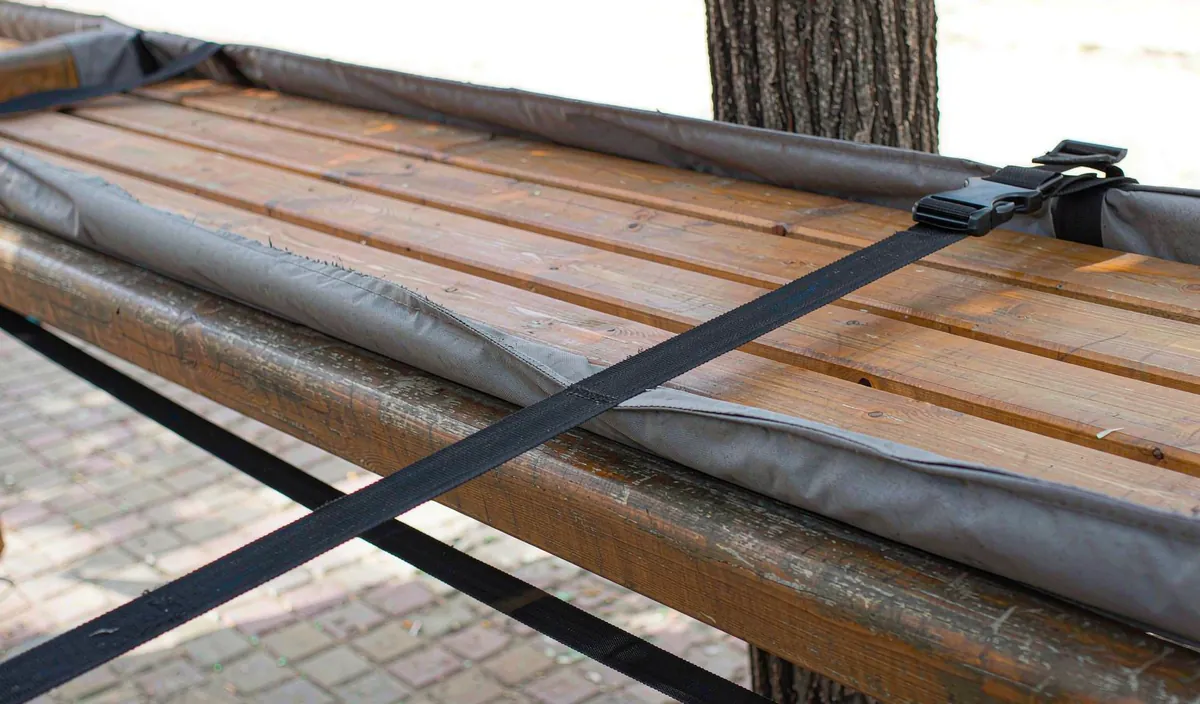
Straps are the answer, and they need to pass under the bench rather than around the arms. A strap around the outside slips over the top in a gust.
Most covers ship with two or four buckles. Use all of them, and pull the hem drawcord tight around the legs.
Fit cuts wind load as much as straps do. A cover with a foot of spare fabric at each end catches twice the air.
Weights on the hem help in light wind and do nothing in a storm. Tying to a rail or a leg post does more.
After a storm, check the hem. A cover that flapped all night shows fraying at the lower corners first.
The mold trap
This is where covers cost people a bench. Mildew needs three things: damp, warmth and still air. A cover supplies all three.
The pattern repeats every winter. Rain soaks the cover and sun warms it. The water evaporates, night cools it, and the vapor condenses on the inside.
By spring the seat has black spots. The cover’s inner face carries white fuzz.
A bench on soil is worse. Mulch and grass hold water at the feet, and the cover keeps the vapor in.
Three habits break the cycle. Cover a dry bench only, and leave the hem off the ground. Lift the cover once a month and let both faces dry.
A musty smell means the bench needs a wash. Give it a dry week before it goes back under. The care guide covers what damp does to the slats and the feet.
Cover it, or move it inside
A shed beats a cover. A garage beats a shed. An unheated room beats all three, because the wood stays dry and the temperature moves slowly.
If you have somewhere to put the bench, use it and skip the cover entirely.
A covered porch is the next best thing. Rain never reaches the bench, so a cover only earns its place against blown spray and sun.
Outdoors with no shelter, a cover is worth having. Add airflow under the hem and keep the feet off wet ground.
A bench used every week does not want a fitted cover. The daily on-and-off routine wears the straps and the coating. Use a loose sheet for the off season instead.
A storage bench needs emptying first. A box full of cushions under a cover holds far more moisture than an empty one.
Winter: cover it wet and you lose
Most people cover their bench in November, and November is often wet. That combination is the problem.
Water trapped in November sits there until March. Four months is enough for mildew to reach the wood under the finish.
Wait for a dry, breezy day. Give a damp bench two or three days in the open first, then cover it.
Species changes the stakes. Teak and cedar shrug off a wet winter, and pine goes soft at the feet.
Snow load matters too. A flat cover sags into a bowl, holds meltwater and freezes solid against the seat.
A cover with a peaked or ridged top sheds snow. Failing that, knock the snow off after each fall.
Never wrap a bench in plastic sheeting. It is the one material that guarantees condensation on the inside.
Freeze and thaw cycles move wood more than steady cold does. A cover that keeps rain off and lets vapor out softens that cycle.
What a cheap cover costs you
A 20 dollar cover lasts one winter. The second winter it cracks along the folds and starts shedding flakes onto the wood.
Those flakes are polyurethane. They stick to a damp slat and dry there, and they are tedious to remove without scraping.
Cheap PVC-backed covers leave pale marks on wood that has sat against them. The plasticizer migrates into the finish.
The real cost is not the cover. It is the refinishing, or the rot that starts because the cover held water against the seat.
Price bands are roughly honest here. Under 30 dollars buys a season, and 30 to 60 buys two or three. Above 60 buys taped seams, vents and a coating that survives sun.
One cheap cover that traps moisture does more damage than no cover at all. That is the sentence to remember at the checkout.
Making a cover last a third season
Wash the cover before you put it away. Dirt holds moisture against the fabric and speeds up UV damage.
Use mild soap and water, rinse it, and dry it fully in shade. A cover folded away damp grows mildew in the bag.
Fold it loosely along different lines each year. The same crease cracks first.
Store it indoors in a breathable bag. A sealed bin works if the cover goes in bone dry.
Re-proof the fabric every spring with a spray treatment. It restores the water beading for another season.
Patch small tears with an adhesive patch before they spread. A torn corner turns into a torn panel in one storm.
Keep the cover off the ground through summer. Gravel and paving wick damp into the hem.
Common questions
Do bench covers cause mold?
They can, and often do. A cover holds vapor against the wood, and three damp months is enough for mildew to start.
Should a bench cover be waterproof or breathable?
Both, and breathable matters more. A waterproof cover with no vent keeps the rain out and the damp in.
What size cover fits a 5-foot bench?
Measure the overall length first. A 60-inch bench with arms measures about 66 inches across, so look for a 66 to 70 inch cover.
Can I leave a cover on all year?
In winter, yes, if it vents. In summer the bench is better off uncovered or stored away.
How do I stop a cover blowing off?
Run the straps under the bench, not around the arms, and cinch the hem drawcord around the legs.
Will a cover protect a bench from frost?
It keeps rain and snow off. Frost still forms on cold nights, and freeze and thaw still moves the wood.
How long does a bench cover last?
One to two seasons at the cheap end. Three to five with a coated fabric, vents and a spring re-proof.
Can I cover a wet bench?
No. That is exactly how the mold trap starts. Wait for a dry day and two dry days on the bench itself.
Do I need a different cover for a backless bench?
Yes. A backless cover runs 28 to 32 inches high, not 32 to 36. A full-height cover hangs loose on it.
Is a plastic tarp good enough?
For a week of rain, fine. For a winter, no. A tarp traps vapor and does more damage than open air.
How do I clean a bench cover?
Mild soap, cool water, a soft brush on stains, then dry it in shade. Never machine dry a coated fabric.
Is a cover worth it on a covered porch?
For rain, no. For sun and blown spray, yes, and a light 300D cover is enough there.
The short version
Measure length, depth and height at the widest points. Then buy by the flat dimensions, not the bench-size claim on the label.
Choose a coated fabric with taped seams and at least one vent. Breathability decides whether the bench survives the winter.
Cover only a dry bench and leave the hem off the ground. Strap it under the bench, not around it.
If you can move the bench inside, do that instead. A cover is the second best answer, and only when it breathes.