- Published on
Outdoor Bench Dimensions: Seat Height, Depth and Length That Fit
- Authors

- Name
- Outdoor Wooden Bench
Almost every bench complaint traces back to one of four numbers. Too low, too deep, too short, or a back at the wrong angle.
A cheap bench with the right numbers beats an expensive one with the wrong ones. That is the whole argument of this page.
Nothing below needs a ruler for long. Four measurements in inches cover it, and three of them come off your own body.
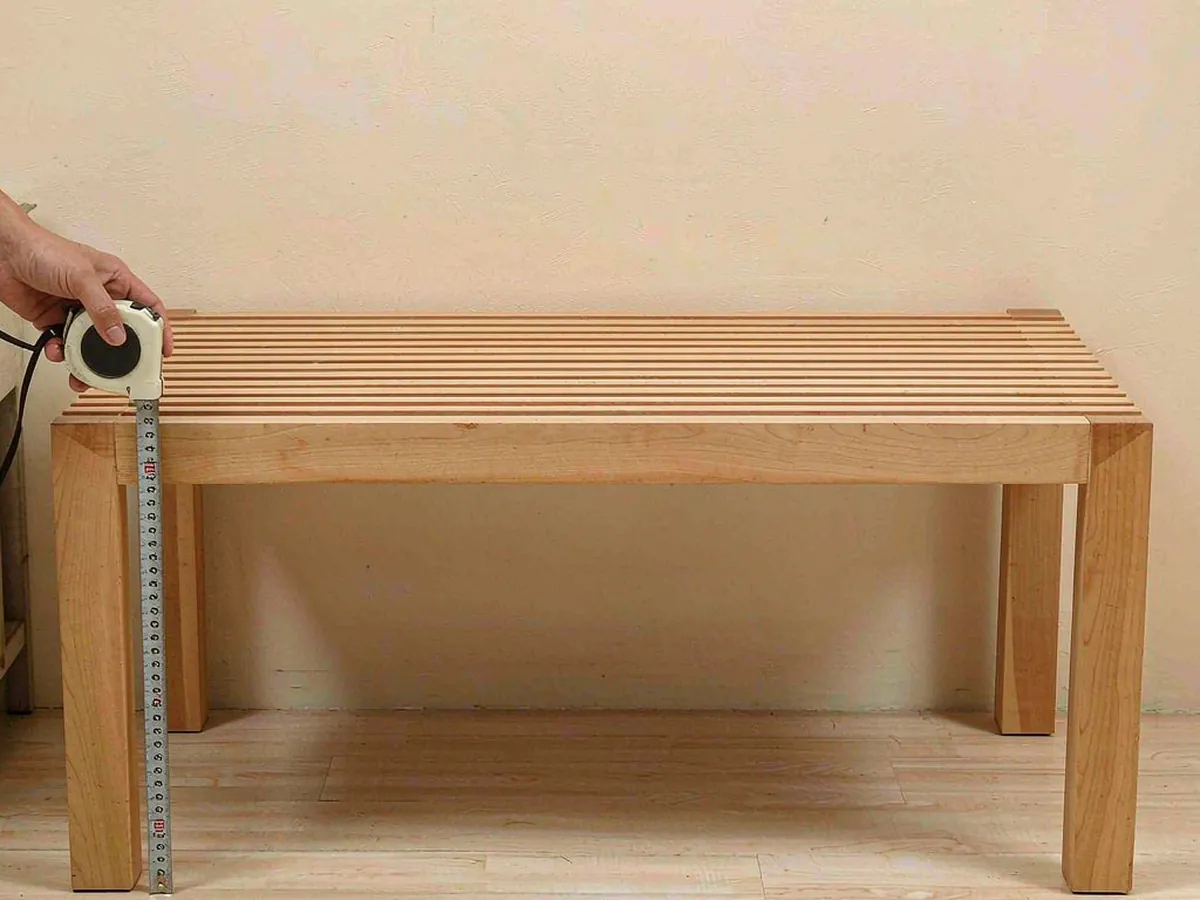
The four numbers, and the order to fix them in
Length comes first, because the space decides it. How many people, and how much wall or patio you have.
Then seat height. Then depth. Back angle and arms last, because they only matter once someone can sit down.
Get the order wrong and you re-cut a bench. Get it right and the rest follows without argument.
Write all four down before you shop. Every listing, plan and cut below comes from them.
Seat height: why 18 inches is the default
Seventeen to nineteen inches covers almost every outdoor bench ever sold. Eighteen sits in the middle, and it matches a dining chair.
Get it wrong in either direction and the fault shows within a minute. Below 16 inches, knees sit above hips. Above 20, most feet stop reaching the ground.
Measure from the ground to the top of the seat surface. Not to the frame, and not to the slat under a cushion.
A bench at 17 inches suits people who sit upright with feet planted. That is why a simple slat bench often lands there, and the build guide cuts one to that height.
Dining chairs and dining benches want 18. If they share a table, keep them within an inch of each other.
Curved seats make this harder to check. Measure at the lowest point of the dip, because that is where you sit.
An existing chair you like is a free template. Measure its seat height and copy the number.
A bench that shares a porch with dining chairs should match them. A bench standing alone can sit an inch lower.

The exception: benches for older knees
Standing up is the hard part, not sitting down. A seat at 18 or 19 inches asks less of a knee than one at 16.
Arms matter more than height does. People push down on an armrest to rise, and a bench without arms gives them nothing to push on.
Measure the crease behind your knee while standing barefoot. That number minus an inch is your seat height.
Most adults land between 17 and 19. Anyone with a hip or knee replacement usually wants the top of that range.
A cushion that slides is worse than no cushion at all. Look for ties, or a grip pad under the foam.
Seat depth: 16 inches, and what deeper costs
Sixteen to twenty inches covers the range. Where you land depends on how far back you lean.
A backless bench you sit upright on works at 16. Nothing behind you holds you up, so your own posture does the work.
A bench with a back wants 18 to 20. Lean into the back and your knees need somewhere to go.
Past 22 inches, people slouch or pile cushions behind themselves. Both are ways of shortening a seat that runs too deep.
The fist test. Sit down with your back against the back and your feet flat. Two to three inches should sit between the seat edge and the back of your knee.
More than that and the bench is deep. Less, and the front edge presses into your legs.
Use it on any bench you can sit on before buying. It tells you more than the listed depth does.
Thigh support is the thing depth buys. Too shallow, and your weight lands on two small points.
A 16-inch seat under a slim adult feels generous. Under a six-foot guest it feels like a shelf.
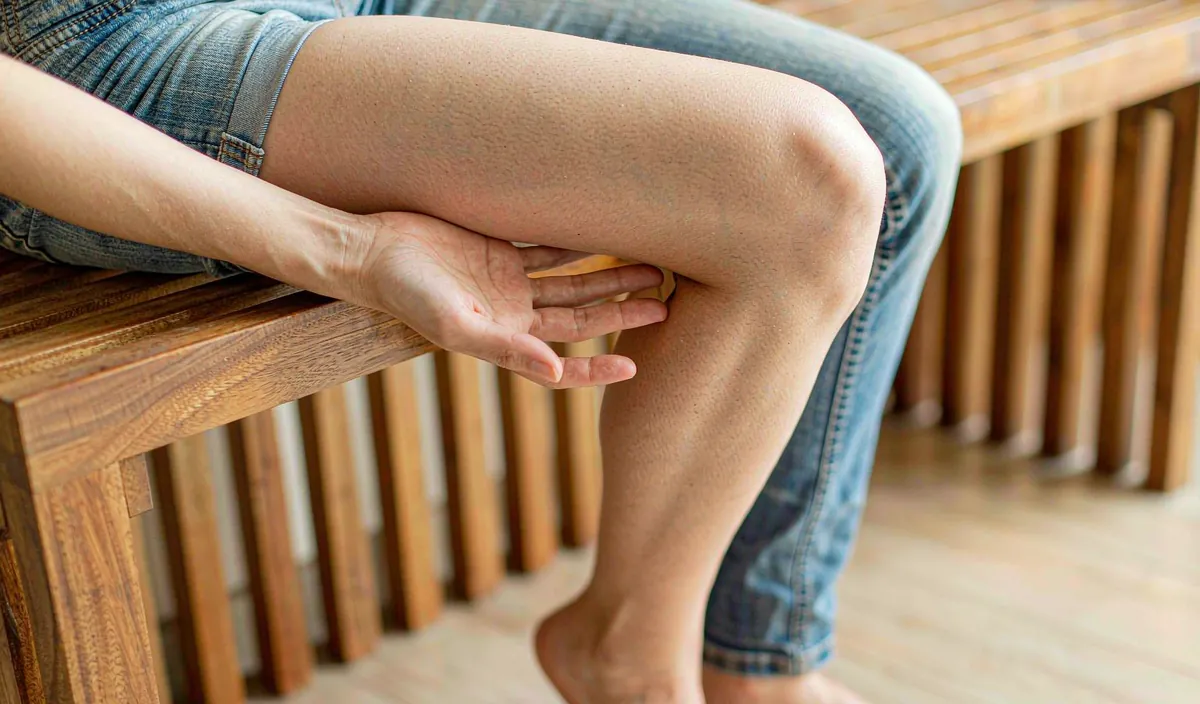
The slope and the front edge
Two details never appear in a listing, and both change how a bench feels.
A seat should fall backward by two to three degrees. That small slope stops you sliding forward on smooth wood.
Too much slope and you feel like you are sliding off. None at all, and you brace your feet all afternoon.
The front edge wants rounding. A sharp edge presses into the back of the thigh and cuts off circulation.
Run a hand along the front slat before you buy. An eased edge adds more comfort than an inch of extra depth.
Length: 24 inches a person, honestly
Twenty-four inches per adult is the honest number. Twenty is the friendly minimum.
Four feet seats two people who like each other. Five feet seats two comfortably, and three if everyone is slim.
Six feet seats three properly. It is also the point where a bench stops looking apologetic.
| Bench length | Adults | Where it works |
|---|---|---|
| 36 inches | 1, plus a bag | Entryways, balconies, tight patios |
| 48 inches | 2, snug | Couples, porches, small patios |
| 60 inches | 2 comfortable, 3 at a push | The sensible default |
| 72 inches | 3 | Family tables, long walls |
| 96 inches | 4, or two shorter benches | A statement, not a seat |
Measure the seat inside the arms. A 60-inch bench with arms can hand you 52 inches of sitting room.
Corner posts eat length too. A chunky leg at each end removes two or three inches nobody can sit on.
Leave room to get in and out at the ends. A bench wedged between two walls seats one fewer than the label claims.
What a cushion eats
A cushion changes every number above. Two inches of foam takes two inches off the height you measured.
Stack a 3-inch cushion on a 17-inch bench and the seat sits at 20. Short adults will dangle.
Depth shrinks as well. A thick cushion pushes you forward until your knees clear the edge by nothing.
Buy the bench for the cushion you plan to use. Or buy low and add foam later.
The reverse also works. If a bench already feels low, a cushion is the cheapest two inches in the house.
Foam density matters more than thickness. Soft foam bottoms out in a season and leaves you sitting on slats.
Two inches of firm foam beats four inches of cheap foam, every summer.
Bench to table: the 10-inch rule
You need 10 to 12 inches between the seat top and the underside of the table. That gap is where your thighs live.
A standard dining table stands 30 inches high. That puts the seat at 17 to 19 inches, which is why bench and chair heights agree.
If the bench tucks under, check the apron. A deep apron or a stretcher bar stops the seat sliding in.
Count the legs at the table end too. A leg in the middle of a 72-inch bench hits most table bases.
Round tables forgive a long bench. Square and rectangular ones do not, because the corner is where your hips want to be.
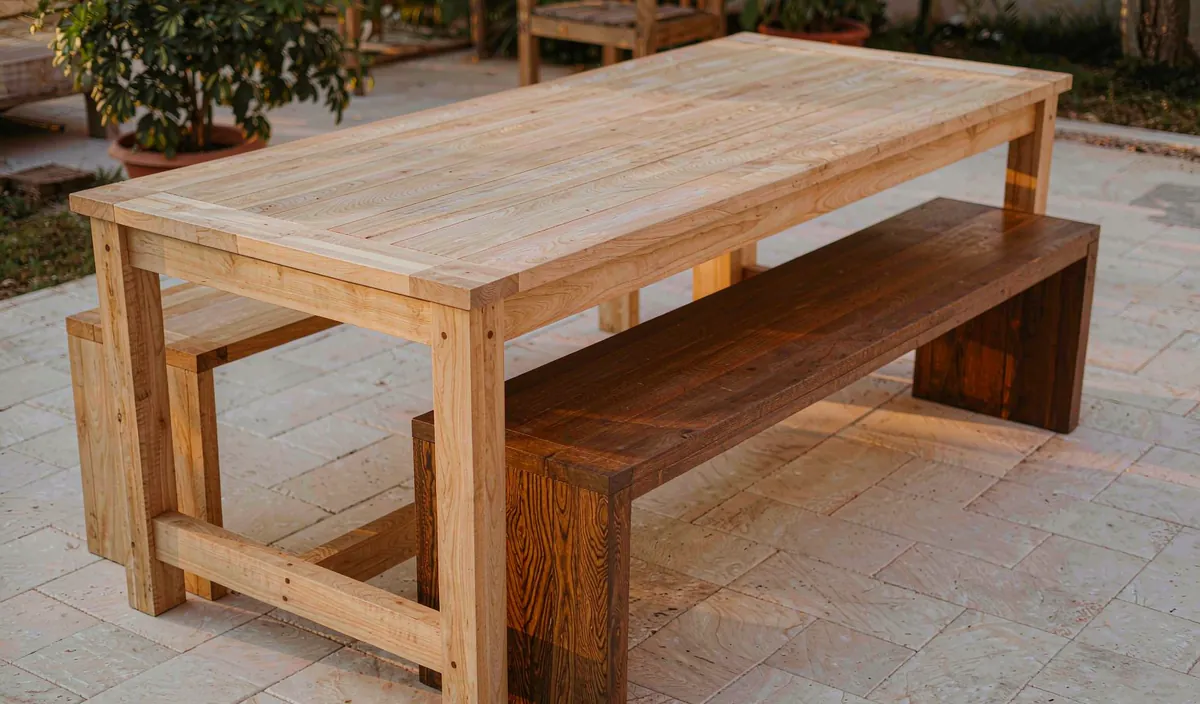
Counter height and bar height
Two more heights exist, and people mix them up. Counter height is 24 to 26 inches at the seat. Bar height is 28 to 30.
Counter height matches a 36-inch counter. Bar height matches a 42-inch bar top.
Both are for perching, not sitting. Feet need a rail or a rung, or the seat turns into a punishment.
A wooden bench at either height needs a footrest built in. Do not let anyone talk you out of it.
Back height and back angle
The back has one job: support the lumbar curve. That curve sits 6 to 8 inches above the seat.
A back that stops 12 inches up covers it. A full back runs 18 to 20 inches and adds head support for lounging.
Angle matters as much as height. Ninety-five to 105 degrees is the working range.
Dining benches sit near 95, because you lean forward to eat. Lounging benches can reach 105.
Past 110 degrees you are reclining, and that only works with a footrest.
If the angle feels wrong on a fixed back, a lumbar cushion in the gap is the cheap fix.
Head support only matters on a bench built for leaning. On a dining bench it just gets in the way.
Armrests: spacing, height and who needs them
Seven to nine inches above the seat is the usual height. Low enough to rest a forearm, high enough to push against.
Arms cost you seating width. Two arms plus the gap at each end can eat 8 inches of bench length.
Width between the arms is the number to check. A 48-inch bench with wide arms may seat one adult, not two.
Makers drop the arms first to save money or space. Older guests miss them first.
If anyone in the house is over seventy, keep the arms.
Arms also stop a cushion sliding off the end. On a windy porch that alone justifies them.
Backless benches: the numbers move
Remove the back and the whole set shifts. Depth can drop to 14 or 16, because nothing pushes your shoulders forward.
Height can drop too. A backless bench is a perch, and most people perch with feet flat and hips high.
That makes it the right shape under a table and the wrong shape for an hour of reading. It also makes it light, and most backless benches move with one hand.
Pair a backless bench with a wall and you get a back for free. Sitting against siding beats leaning on nothing.
Storage benches: lid swing and toe space
The box adds depth, so a storage bench often reads 20 inches deep at the seat. Some of that is lid and hinge.
Leave 20 to 24 inches of clear air above the lid. Or buy one that opens from the front.
A lid that hits a wall stays open, and an open lid collects rain. Check the swing before you commit, and the storage guide covers the rest.
Toe space is the detail nobody lists. Two or three inches of recess at the bottom front stops your heels kicking the box.
Sit on it before you fill it. A loaded storage bench sits differently from an empty one.
Weight capacity, and what carries it
Ignore the number on the listing and look at the frame. Capacity comes from leg thickness, joint type and slat span.
A 2x4 leg at each corner carries two adults without complaint. That is roughly 500 pounds across four legs.
Past 60 inches, add a fifth leg in the middle. Four legs spread that far apart let the seat sag.
Screws into end grain are the weak point, not the wood. Two screws per joint beat one, every time.
A 1-inch slat on a 4-foot span flexes. Flexing is what cracks it, so check slat thickness before brand name.
Anchoring matters more than capacity once the bench lives outdoors. A light bench in a gust becomes a projectile.
Six common benches, measured
Every type below sits in a different range. Use the row that matches what you are buying.
| Bench type | Seat height | Depth | Length | Back | Arms |
|---|---|---|---|---|---|
| Dining bench | 18 in | 16 in | 60 to 72 in | None | None |
| Backless slat bench | 17 in | 16 in | 48 in | None | None |
| Garden bench with back | 17 to 18 in | 18 to 20 in | 60 in | 18 in | 7 to 9 in |
| Park bench | 17 to 18 in | 18 to 20 in | 72 in | 18 in | Optional |
| Patio storage bench | 18 to 20 in | 20 in | 48 to 60 in | Optional | None |
| Balcony folding bench | 17 in | 15 in | 36 in | None | None |
Two rows deserve a note. Public seating standards hold the park bench numbers steady, which is why they vary so little between makers.
The folding bench runs shallower than the rest, because it folds flat. Expect to feel that after twenty minutes.
If you are still choosing, two guides take these rows further. The patio guide and the small bench guide match them to real rooms.
Measure your own body in two minutes
Two measurements on your own body settle most of this before you look at a single listing.
Stand barefoot and measure from the floor to the crease behind your knee. Subtract one inch. That is your seat height.
Sit on a hard chair and measure from the back of your seat to the back of your knee. Subtract two inches. That is your depth.
Length is easier. Take your shoulder width, times the number of people, plus four inches of elbow room.
Write the three numbers on your phone before you go shopping. A listing cannot argue with them, and the buying guide uses the same three to filter models.
Common questions
What is the standard height of an outdoor bench?
Seventeen to nineteen inches, with 18 as the middle. Dining chairs sit at the same height.
How deep should a bench be for a tall person?
Eighteen to 20 inches. Long legs need the extra depth, or the front edge digs into the thigh.
Can I shorten a bench that sits too high?
Yes, if the legs unbolt. Cut all four by the same amount, or the bench will rock.
Is a 4-foot bench long enough for two people?
For two adults who do not mind touching, yes. For two who want space, go to 5 feet.
What is the seat height of a park bench?
About 17 to 18 inches. Public seating standards keep it there, and the back usually runs 18 inches above the seat.
Does a cushion change the seat height?
Yes, by exactly its own thickness. A 3-inch cushion turns a 17-inch bench into a 20-inch one.
How much space should I leave behind a bench?
Three feet if people walk behind it. Allow 12 to 18 inches in front of the seat for knees.
What is the weight limit of a wooden bench?
A well-built one holds 500 pounds. Past that, the joints fail before the wood does.
How far should a bench sit from a table?
Ten to 12 inches below the tabletop. That is the clearance your thighs need.
Do arms make a bench narrower?
Yes. Two arms can cost 8 inches of sitting room, so measure between them, not across the outside.
How high should a bench be for a six-foot person?
Nineteen inches, at the top of the range. Tall frames also want 20 inches of depth.
What size bench fits a small balcony?
Thirty-six inches, seating one person with a bag beside them. That is the smallest size that still works.
The short version
Eighteen inches high, 18 deep, 24 inches per person. Those three numbers fit most adults and most spaces.
Drop the depth to 16 and the height to 17 for a backless bench you sit upright on. Add an inch for older knees.
Subtract your cushion thickness from the height before you buy. Then measure the seat between the arms, not the headline length.