- Published on
Outdoor Wooden Bench Care: How to Oil, Wash and Store It
- Authors

- Name
- Outdoor Wooden Bench
A wooden bench asks for two things. Water has to run off it. The wood has to hold a little oil.
Every bench that rots in three years instead of ten failed on one of those. The finish was wrong, or the water had nowhere to go.
The rest is detail. Most of it fits into twenty minutes a year.
This guide covers the wash, the oil, the mold, the gray and the winter. Same order you meet them.
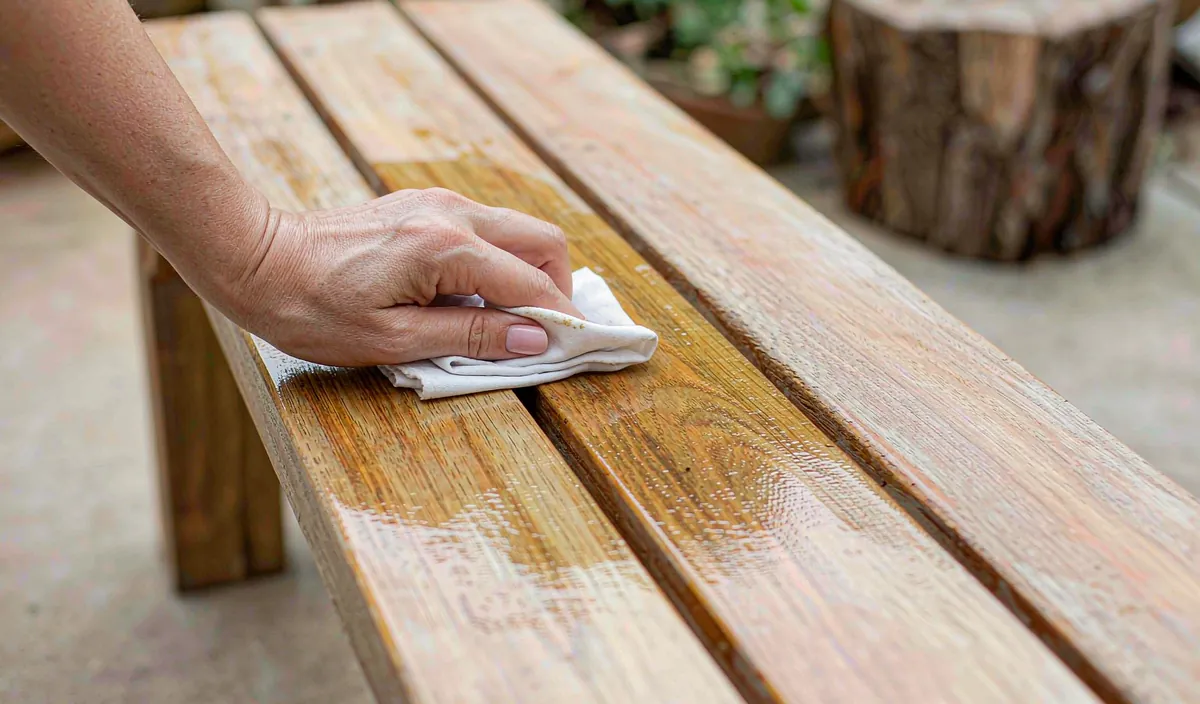
What water and sun do to a wooden bench
Wood moves. It takes on water and swells. Then it dries out and shrinks back.
Every wet night and dry afternoon moves it a little. Over one season, that adds up to a lot of small movements.
The cut ends of a board move fastest. Water soaks in quicker there than on the flat face. That is why cracks show at the ends first, and why the feet fail before the seat.
Sun works on the surface. Ultraviolet light breaks down the part of the wood that holds its color. The surface turns silver-gray and the fibers go soft.
That gray layer is thin. The wood under it is usually sound.
So there are two problems, not one. Keep water out of the joints. Slow the sun down with a finish that soaks in.
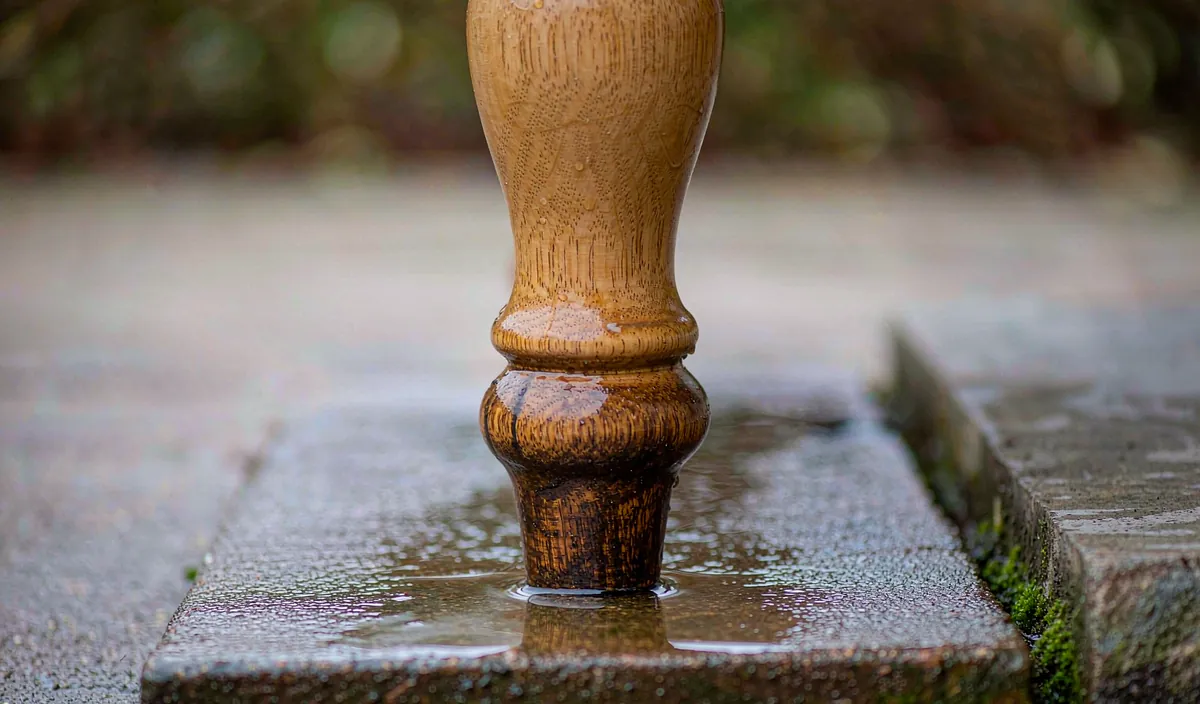
The damp foot is what kills a bench
Look at a bench that died early. The seat is normally fine. The bottom of the legs is normally not.
A leg standing in soil or mulch stays wet for days after the rain stops. The end grain pulls that water up like a straw. Then the wood swells, the finish splits, and rot starts inside the leg.
Fix this before you think about oil. Set the feet on pavers, gravel or a rubber pad. Keep them out of the dirt and out of the puddle that forms under the bench.
The seat needs the same kind of look. Water should fall between the slats, not sit on them. A slat bench with tight joints and no gap holds a thin film of water all winter.
Which wood you started with changes how much of this matters. Teak and cedar shrug off a wet foot for years. Pine and acacia give up faster.
Three checks before you spend anything
Walk around the bench before you buy a single bottle. Three minutes tells you what the job is.
Push a screwdriver into the bottom of each leg. If the tip sinks in, the wood is soft. Soft wood will not hold oil, glue or a new screw.
Rock the bench with one hand on the top rail. A small wobble means a loose joint, and that is a repair. A deep creak from a leg means rot inside the joint.
Drag a fingernail across a slat. If the surface feels furry or lifts in flakes, the old finish has failed. That bench needs a light sand before any oil.
A bench that passes all three needs the yearly routine and nothing else. A bench that fails one needs a repair first. Otherwise the oil goes to waste.
Wash it before you oil it
Oil over dirt does nothing. The grime seals the surface, so the coat sits on top of it instead of in the wood.
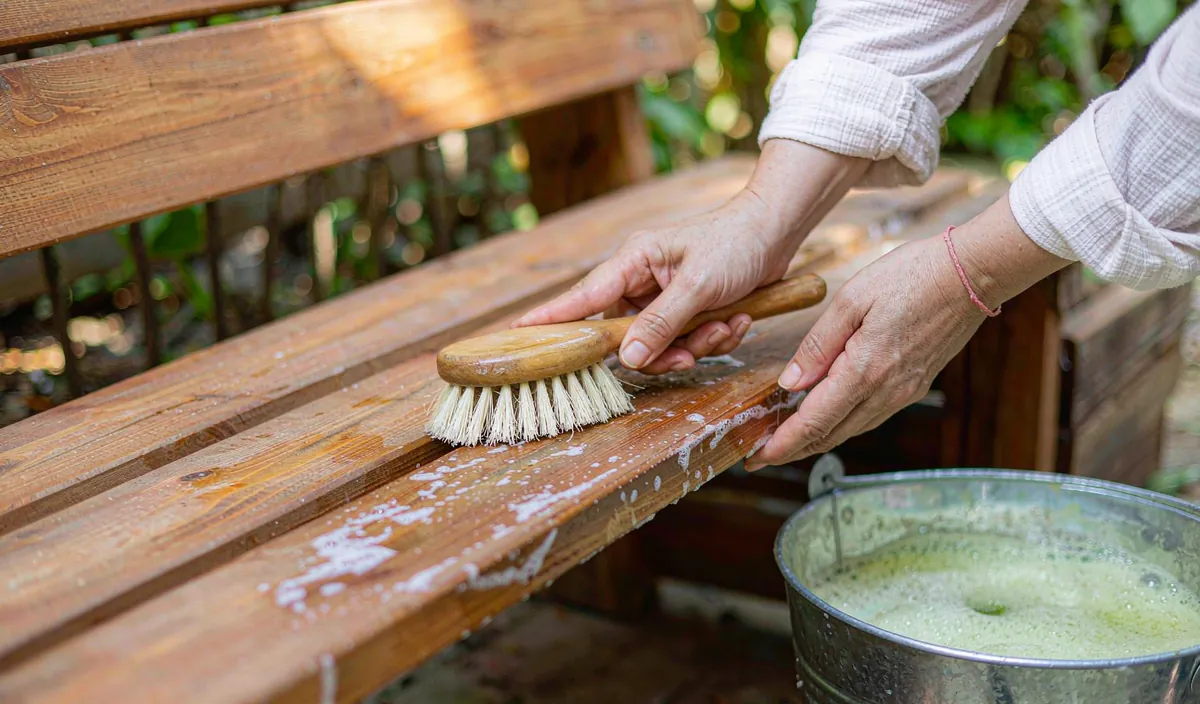
Fill a bucket with warm water and a few drops of dish soap. Scrub with a soft brush, working along the grain. Rinse with a hose, then let the bench dry for a full day.
Skip the pressure washer. It pushes water into the joints and lifts the soft grain between the hard lines. You will see the damage as fuzz a week later.
A hose and a brush do the same job without opening the wood up.
Mold, mildew and the bleach mistake
Green or black patches mean the wood stayed damp too long. The growth sits on the surface, so it comes off.
White vinegar and water, half and half, handles most of it. Spray it on, leave it ten minutes, and scrub with a brush. Rinse after.
Bleach needs care. It lightens wood unevenly, raises the grain, and leaves salts behind. Use oxygen bleach if you need something stronger than vinegar.
Airflow matters as much as any cleaner. A bench pushed flat against a damp wall or a fence dries slowly on the back face. Leave a gap of two or three inches.
Let the bench dry completely before the next step. Oil over damp wood traps the water you wanted gone.
Gray wood is not rotten wood
A silver bench is not a dying bench. Gray is a thin weathered layer on top of wood that is usually still sound.
You have two honest choices here. Keep the gray, because it costs nothing and needs no work. Or bring the color back, which is a sanding job rather than a chemical one.
Sand with 80 grit, then 120, always along the grain. One light pass is usually enough to get under the gray.
A slat takes two or three sandings over its life before it gets thin. After that, replace the slat instead of sanding it again.
Black stains are a different problem. Screws and nails leave iron behind, and iron reacts with the wood around it.
A wood brightener lifts those stains before you sand, and every hardware store sells it. The active ingredient is oxalic acid.
Some woods go silver faster than others. Eucalyptus is one of the fast ones, and it fades within a year or two. The eucalyptus bench in this review shows what that looks like after a season outside.
A bench left out in the woods is the other end of this argument. Nobody oils it, it goes gray, and it keeps working for decades. That is the lowest-care version of the same object.
Which oil, and which bottle to skip
Most teak oil in a hardware store has never been near a teak tree. It is a blend of linseed oil, tung oil and solvent, with a UV blocker stirred in.
That blend is fine. The name on the bottle matters less than what the stuff does. You want a finish that soaks in, dries, and blocks some sun.
| Finish | What it is | Lasts outdoors | Watch out for |
|---|---|---|---|
| Boiled linseed oil | Thin, soaks deep, cheap | 3 to 6 months | Rags can self-ignite; wood darkens over time |
| Teak oil | Linseed and tung blend with solvent | 6 to 12 months | Wants a second coat in full sun |
| Pure tung oil | Slow-curing, water resistant | About a year | Takes days to dry; needs thin coats |
| Penetrating deck stain | Oil with pigment and UV blockers | 1 to 2 seasons | Color is hard to change later |
Skip the kitchen oils. Olive oil and cooking oil go rancid, and rancid oil feeds mildew. Motor oil is worse, and it never dries.
A film finish is the other common mistake. Polyurethane and varnish crack when the wood moves.
Once the film cracks, water gets under it and stays there. On outdoor furniture, a film is a trap.
Oiling in twenty minutes
Pick a dry day. The wood should be dry to the touch, and the air above 50°F. Shade beats direct sun, because the oil soaks in instead of flashing off.
Pour a little oil into a tray, not onto the bench. Work it in with a rag or a foam brush, along the grain, one slat at a time.
Wait fifteen minutes. Then wipe off whatever is still wet on the surface. Oil left sitting turns sticky and collects dust.
One thin coat is usually enough. Two coats, a day apart, last longer on a bench in full sun.
Watch the forecast. The coat wants a dry day behind it. Rain on fresh oil lifts the finish and leaves it patchy.
The splash test tells you when to go again. Flick a little water on the seat. If it beads up, you are still covered.
If it darkens and soaks in, the wood is thirsty.
Stage the work by exposure. A bench under a roof needs a coat a year. A bench out in the open wants two.
Screws, joints and hinges
Wood outlives bad hardware. A plain steel screw in an oak bench rusts, stains the wood black around the head, and loses its grip.
Stainless steel or hot-dipped galvanized fasteners cost a little more. They also outlast the bench. Check them once a year and give each one an eighth of a turn.
A storage bench adds a hinge to the list. Water sits in the knuckle, the pin rusts, and the lid stops closing flat. The hinge is the part that goes first.
A drop of oil in the fall keeps it moving.
Loose joints are a water problem, not a glue problem. Dry the joint out, then re-glue with an exterior-grade glue. Glue a wet joint and it will come apart again.
Winter: cover it, raise it or move it
Winter is where a ten-year bench becomes a three-year bench. Cold is not the reason. Water freezing inside the wood is.
Water expands when it freezes. In a wet joint or a wet foot, that expansion pushes outward with nowhere to go. The wood splits along the grain.
You have three options, and any of them works. Move the bench into a garage or a shed. Raise it on blocks so the feet stay clear of standing water.
Put the blocks under the legs, not under the seat. The leg takes the load that way, and the seat keeps its shape.
The third option is a breathable cover that ties down over the seat.
Do not drape a plastic tarp over it. The tarp keeps rain off, then holds condensation underneath. A bench under a tarp can end up wetter than one in the open.
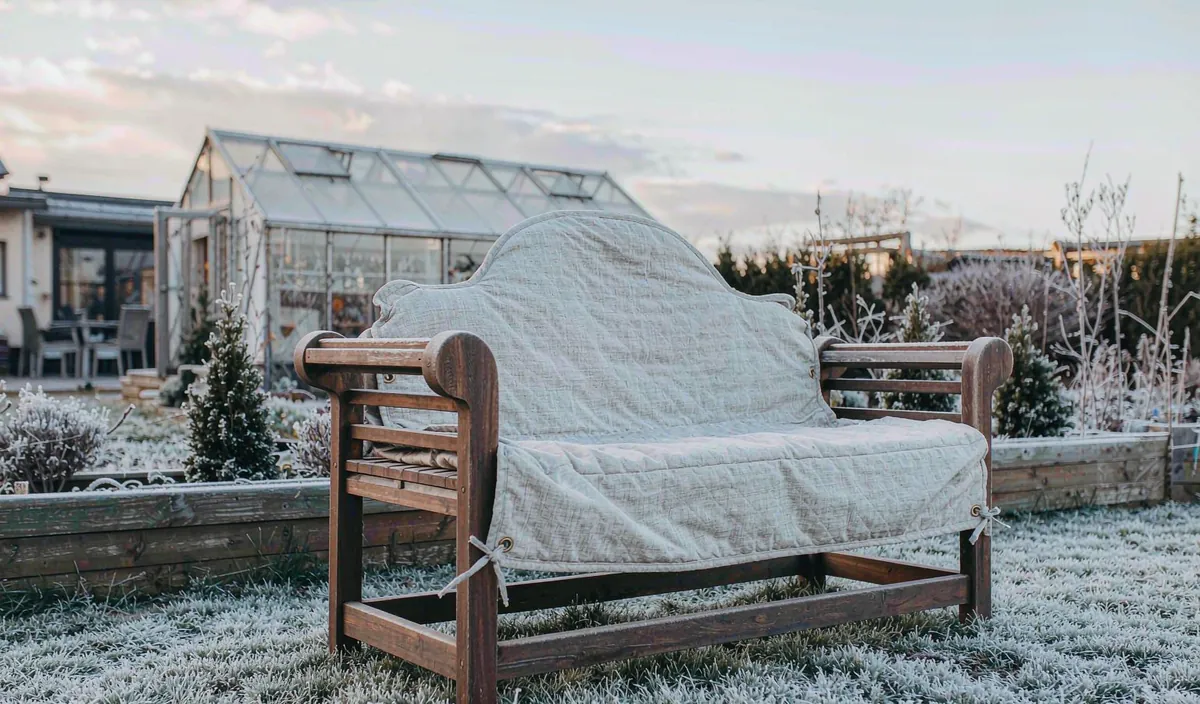
If the bench stays put, late fall is a fine time to oil it. Just make sure the wood is dry first. Oil on a damp bench, then a cover on top, traps the water you were trying to keep out.
A small bench is the easy case. Carry it inside and skip the whole argument.
What a good cover looks like
A cover has one job. Keep the rain off the seat and let moisture out from below.
Woven polypropylene and heavy canvas both breathe. A cheap plastic tarp does not, and that is the whole problem with tarps.
Look for a cover with vents at the top and a tie at each leg. Vents let damp air escape. Ties stop the wind from lifting the cover and filling the folds with water.
Skip the fitted cover that seals to the ground. Water runs off the seat, then pools inside the skirt and sits against the feet all winter.
Cracks, soft spots and when to give up
Small cracks along the grain are normal. Wood opens and closes with the weather, and a hairline crack in a slat does not weaken the bench.
A crack across the seat is different. It runs against the grain, usually from a screw hole or a joint. That one lets water straight into the core, so deal with it before winter.
Fill the crack with an exterior wood filler. Or drill a small hole at the end of the crack to stop it spreading. Then oil the area like the rest of the seat.
Some benches are past saving. They have soft feet and a wobble together. Push a screwdriver into each foot and rock the seat.
When two legs are soft, the repair costs more than a new bench.
The year in four jobs
This is the whole routine. It fits into one afternoon spread across twelve months. An outdoor wooden bench needs about two hours of work a year.
| When | Job | Time |
|---|---|---|
| Spring | Wash, dry, oil | 1 hour |
| Early summer | Splash test; second coat if water soaks in | 20 minutes |
| Fall | Check the screws, oil the hinge, clear the feet | 20 minutes |
| Before the first freeze | Move, raise or cover | 10 minutes |
Two of those jobs are inspections. Walk around the bench with a screwdriver and look at the feet. Most repairs cost less than a new bench because you caught them early.
Common questions
How often should I oil a wooden bench?
Once a year is enough for most benches under a roof. A bench in full sun and rain will want two. The splash test is a better guide than the calendar.
Can I use linseed oil on outdoor furniture?
Yes, as long as you use boiled linseed oil. Raw linseed stays tacky for weeks. Spread the rags flat to dry before you bin them, because linseed rags can catch fire on their own.
Will a wooden bench survive winter outside?
Most will, if the feet stay out of water. Raise the bench or set it on gravel. A bench standing in wet mulch through a freeze is the one that splits.
How do I stop a bench going gray?
Oil it with a product that has a UV blocker. That slows the gray down but does not stop it. No oil keeps a bench looking new for good.
Is it safe to pressure wash a wooden bench?
No. Pressure washing drives water into the joints and tears the soft grain. Use a hose, a brush and dish soap.
My bench has white spots after winter. What is that?
Mildew, usually. It grows where the wood stayed damp. Vinegar and water takes it off, then let the bench dry before you oil.
Do I need to sand before oiling?
Only if the surface feels rough, or if old finish is flaking. A smooth bench that has gone gray does not need sanding before an oil coat.
Should I oil a brand new bench?
Most new benches come with a factory coat. Oil it at the end of the first season, not the first week.
The short version
Keep the feet out of water. Wash once a year with soap and a brush. Oil thin, wipe off the extra, and check the splash test before you decide it needs more.
Skip the pressure washer and skip the tarp. Those two do more damage than a wet winter does.