- Published on
Painting a Wooden Bench: Prep, Paint and the Peeling Trap
- Authors

- Name
- Outdoor Wooden Bench
Paint fails at the wood. The can is rarely the problem.
Three things decide the outcome. How dry the wood is, how well you cut back the old surface, and whether the primer suits the species. Get those right and a mid-priced paint holds five years.
Get them wrong and the best paint on the shelf peels in one winter.
Most of this job is not painting. It is sanding, drying and waiting. The brushing itself takes an afternoon.
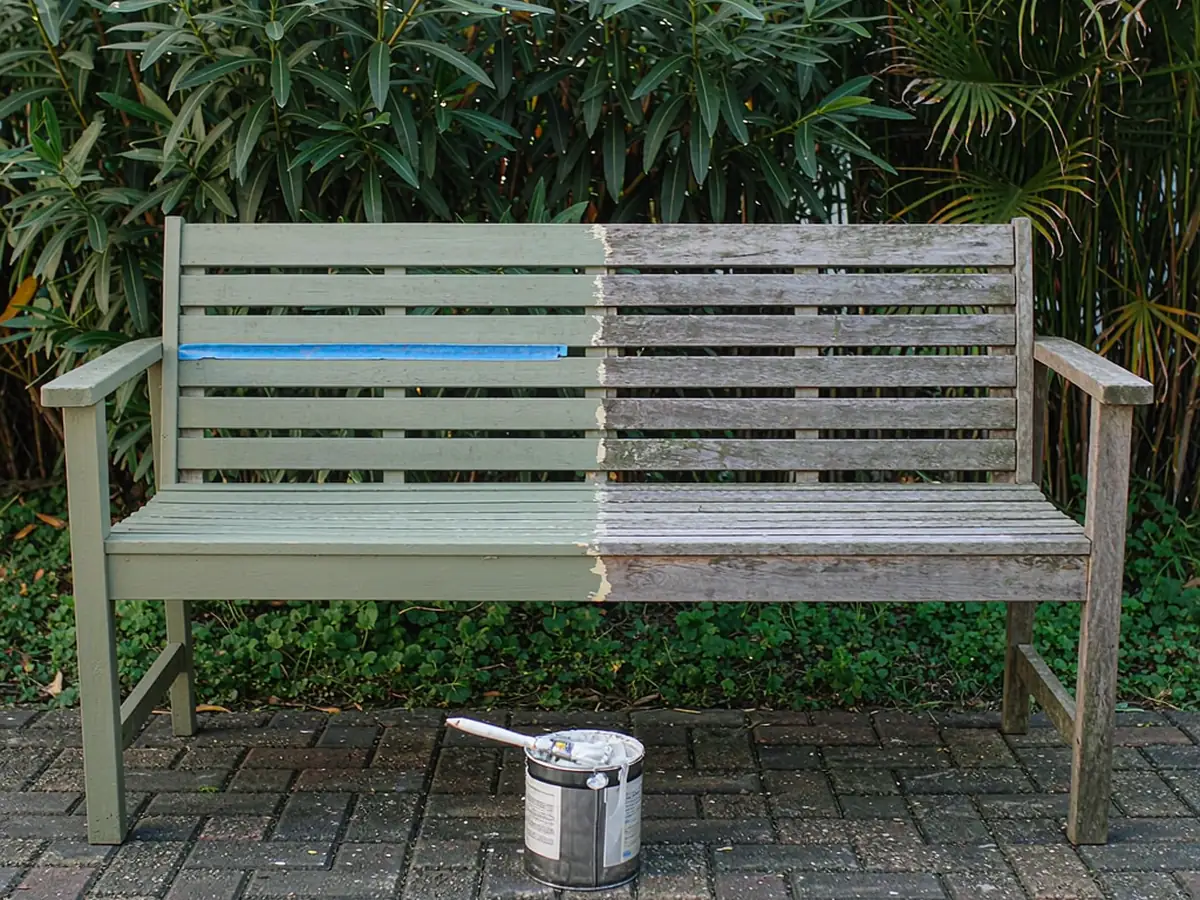
Paint is a film, and wood moves
Paint does not soak in. It sits on the surface as a thin skin, and the skin has to bend with everything under it.
Wood moves all year. It swells in damp weather and shrinks in dry. A bench slat can shift a sixteenth of an inch across the grain between April and October.
A hard film cannot follow that. It cracks along the grain first, because that is the direction of least give.
Once a crack opens, water gets in and stops there. The wood under the film stays wet while the surface looks dry.
Then the crack widens and the film lifts. That is the peel you find in spring.
The care guide calls a film finish a trap. That warning covers varnish and polyurethane, and paint behaves in a different way.
Varnish is hard and clear. It cannot flex, and it lets ultraviolet light straight through to the wood. The build guide skips it for those two reasons.
Paint is softer and full of pigment. The pigment blocks the sun, and the resin keeps enough give to follow a moving slat.
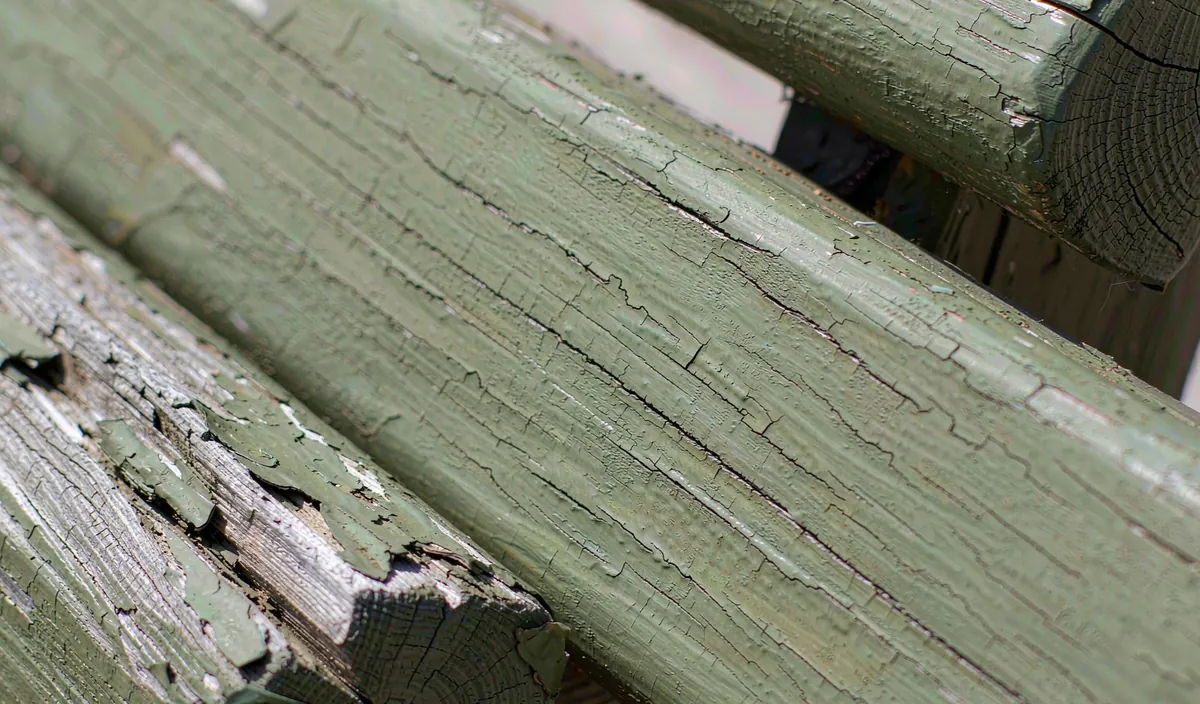
A painted bench still cracks at the joints eventually. It takes years instead of one season, and the crack does not go straight through to bare wood.
Paint, solid stain or oil
Three finishes, three different jobs.
Paint builds a film. It hides the grain, blocks all the light and gives you a color you can change later. It also wants the most prep.
Solid stain soaks in and leaves no film. Nothing can peel, so it wears thin instead. That makes it forgiving on a bench with no shelter.
Oil feeds the wood and leaves almost nothing on the surface. It looks the most natural and asks for the most recoating. The care guide covers that half of the job.
| Finish | Hides the grain | What it does | Life outdoors | Upkeep |
|---|---|---|---|---|
| Paint | Yes | Builds a flexible film | 3 to 5 years | Touch up chips each year |
| Solid stain | Yes | Soaks in, no film to peel | 2 to 3 years | Recoat when it wears thin |
| Oil | No | Feeds the wood, no film | 6 to 12 months | Recoat twice a year |
Pick paint for a color and a surface you can wipe clean. Pick solid stain for a bench that stays outdoors all year and never sees a scraper.
Pick oil when the grain is the reason you bought the bench.
One rule sits above all three. Never mix them. Paint will not grip an oiled surface, and stain will not cover a painted one evenly.
Test the moisture first
New wood holds water, and paint over water fails.
The safe figure is under 15 percent moisture. Most people do not own a meter, so use plastic instead.
Tape a square of clear plastic to a flat slat and press the edges down hard. Leave it overnight. Water beading on the underside means the wood is still drying.
Pressure-treated wood is the usual offender. It arrives wet from the yard and needs three to six months before it takes any coating.
A splash test tells you the same thing faster. Throw half a cup of water at the surface.
If it beads and rolls, the wood is still sealed and damp inside. If it soaks in and darkens, it is dry enough.
Paint damp wood and the film traps the water. The first warm day pushes vapor up under the paint, and a blister forms overnight.
Prep is the whole job
Four steps, in this order. Scrape, sand, degrease, dull.
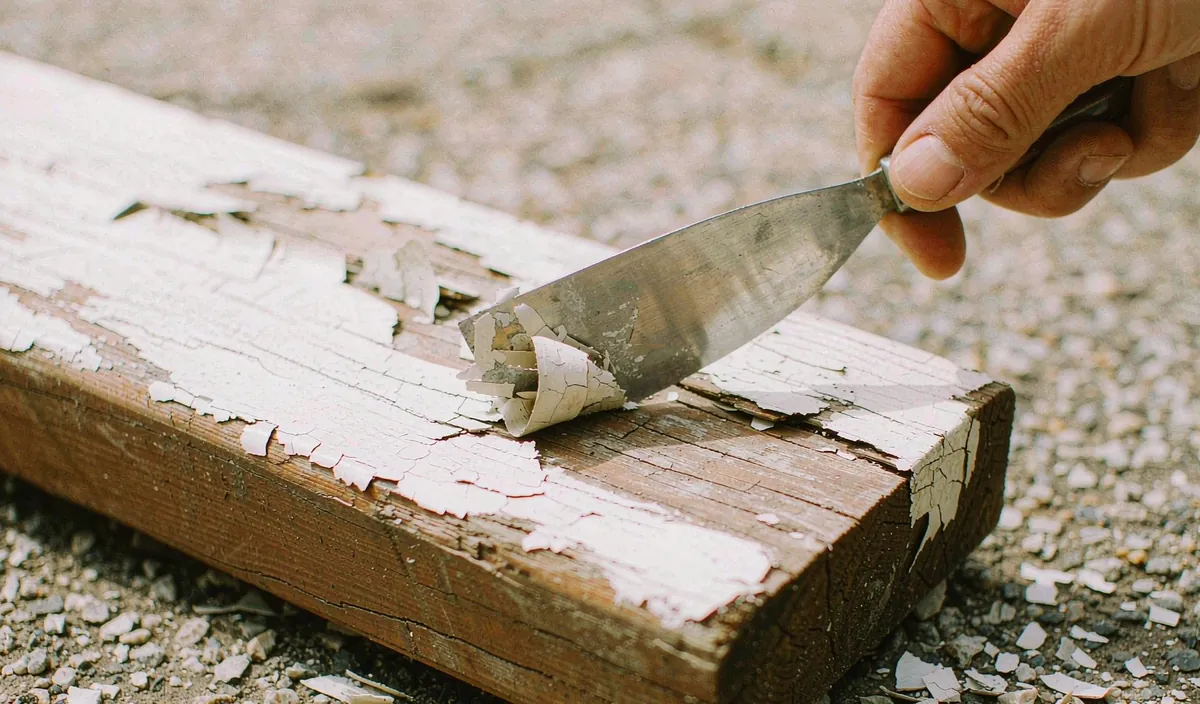
Scrape anything loose. A putty knife does it, and a carbide scraper does it faster. Take off every flake, including the ones that look stuck.
Sand the surface with 80 grit, then once more with 120. You are not removing the old paint. You are breaking the gloss so the new coat can key into it.
Degrease with household detergent and water, then rinse. Hand oils, sunscreen and bird droppings all land on a bench seat, and paint will not bond over any of them.
Dull the edges of every bare patch by feathering them out. A ridge you can feel with a fingernail will show through two coats.
New wood from a planer has one more problem. The blades polish the surface into something called mill glaze, and paint slides off it.
Sand new stock with 80 grit before anything else. That single step prevents a lot of peeling.
Knots, tannin and bleed
Two habits of wood cause most of the stains that show up under a fresh coat.
Knots. Pine and other softwoods carry resin in the knot. It migrates through latex paint and leaves a brown circle that grows for a year. Seal each knot with shellac before the primer goes on.
Tannin. Cedar, redwood and oak hold water-soluble extractives. They bleed through a latex primer as a pink or brown wash. Use a stain-blocking primer on those species.
The wood types guide covers which species do what outdoors, and which ones fight back.
Both problems appear after the topcoat, which is the annoying part. You cannot fix either one later without repainting.
The fix is a sealer under the primer, and it costs ten minutes.
Primer, the step people skip
Primer is not thin paint. It bonds to the wood and gives the topcoat something to grip.
Bare wood wants an oil or alkyd primer. It penetrates, it seals the grain and it holds the topcoat down for years.
An already-painted bench wants a bonding primer, and only where the old film is sound. Scuff that film with 120 grit first.
Skip the primer and you save an hour. You lose the first winter.
Never use primer as a finish coat. It has no UV resistance, and it chalks and fades within months.
One trap deserves its own warning. Latex over old oil paint fails unless you sand and prime between them.
Which paint, in plain terms
Four families cover almost every bench.
100% acrylic latex is the default. It flexes, it dries in hours and it cleans up with water. Buy the exterior grade, never the interior one.
Alkyd enamel lays a harder film. It grips old oil paint better than anything else and shrugs off scrapes. It also takes a day to recoat, and it yellows as it ages.
Deck and siding hybrids sit between the two. They dry like latex and hold like enamel. For a bench, that is the safe middle.
Milk paint suits bare new wood and a flat look. Outdoors it needs a topcoat, or it dusts off in the first rain.
| Paint | Feel | Over old paint | Recoat | Best for |
|---|---|---|---|---|
| 100% acrylic latex | Flexible, thin | Needs a bonding primer over oil | 2 to 4 hours | Most benches |
| Alkyd enamel | Hard, glossy | Bonds to old oil paint | 24 hours | Heavy use, tight joints |
| Deck and siding hybrid | Firm but flexes | Good over either | 4 to 6 hours | The safe middle |
| Milk paint | Flat, chalky | Bare wood only | 2 hours | New bare benches |
Ignore the word enamel on a can unless the label says alkyd or hybrid. Plenty of latex paints use it as decoration.
The word exterior matters too. Interior paint lacks the mildewcide and the flexible resin, and it fails fast on a bench.
Brush, roller or spray
Brush for control, roller for speed, spray for a factory look.
A brush pushes paint into the grain and into the joints. On a slatted bench that matters more than speed, because the joints are where water sits.
A roller covers flat slats in a fraction of the time. Use a foam cover for a smooth finish and a short nap for rough sawn wood.
A sprayer wins on a new build with twenty slats. Thin the paint to the maker’s figure, mask everything within ten feet, and expect to use more paint, not less.
Whichever tool you pick, brush back over the wet coat at the end. That pass knocks down the texture and pushes paint into the end grain.
Two thin coats, plus the end grain
Two thin coats beat one thick coat every time. A thick coat skins over, traps solvent underneath and cures soft.
Read the recoat window on the can and stay inside it. Water-based paint gives you two to four hours. Oil gives you a full day.
Miss the window and you wait a week and sand.
End grain drinks paint three times faster than a flat face. Load the brush and push it into the end of every slat. If the first pass disappears, give it a second before you move on.
The feet get the same treatment, bottom face included. Water wicks up through an unpainted foot, and the paint above it lifts from behind.
The underside matters less on a slat seat, which drains on its own. On a solid seat it matters a lot. Skip it and the bench rots from below while the top still looks fine.
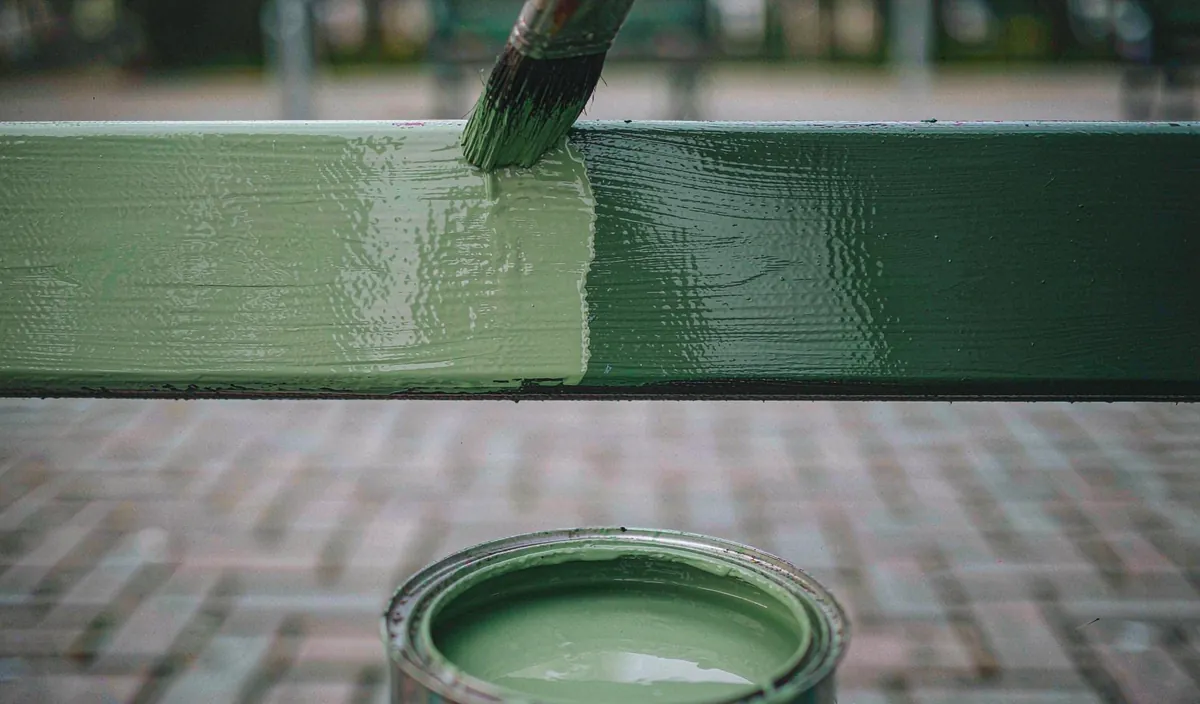
Color: heat, dirt and glare
Color is not only a taste question on an outdoor seat.
A dark painted seat in July sun reaches 150 degrees or more. White stays near 100. Bare legs on a dark bench feel that gap within seconds.
Light colors show every footprint, pollen grain and mildew spot. Dark colors hide dirt and show scratches, chalk and dust.
Mid tones are the practical answer. Gray, sage, faded blue and warm off-white all hide a season of use.
Gloss level matters too. High gloss wipes clean and throws hard light back at you.
Satin and matte look better on old wood because they hide the dents. Flat exterior paint collects dirt and will not let go of it.
Curing takes a week
Dry and cured are not the same thing.
Paint feels dry in hours. The film stays soft underneath for days, and it takes a week to reach full hardness.
Keep weight off it for that week. A cushion pressed into soft paint leaves a pattern that never comes out.
Two weeks is safer for a bench in daily use. Foot traffic on a soft film polishes it, and the sheen goes patchy.
Rain is the other risk. Water-based paint shrugs off a shower after an hour. Oil paint wants a full dry day, and cool nights stretch that out.
When it peels, and the trap of painting over it
Peeling is a symptom. The cause is moisture, or a surface that never took the coat in the first place.
Painting over a peeling edge does not fix it. The new coat bridges the gap, then cracks along the same line within a season.
The repair has four steps. Scrape back to sound paint, sand the edge until it feathers, prime the bare wood, then repaint the slat.
Spot painting looks worse than a full slat. Sheen and color never match on an old finish.
If the peel covers a whole face, stop patching. Strip it with a chemical stripper, sand back to bare wood and start again. That is a weekend, and it buys five years.
If the wood under the peel is split or soft, fix that first. The repair guide covers splits and rotten feet.
A bench you already oiled
Oil and paint do not mix. A trace of oil film is enough to stop the bond.
Two ways out. Wait six to twelve months of weather, which breaks the oil down, then scrub and sand. Or strip it now with a degreaser and 80 grit and get back to bare wood.
Do not trust a wash with soap. Oil sits down in the pores, and paint bonds to the pores.
The same rule covers wax and furniture polish. If a bench ever had either, treat it as oiled.
Five years, honestly costed
A quart of exterior paint covers about a hundred square feet. A slatted bench presents 40 to 60 square feet once you count both faces, the arms and the legs.
So one quart does two coats with some left for touch-ups. A gallon is more paint than one bench will use before it goes bad in the can.
The paint is the cheap part. Sanding, priming and two coats is an afternoon and a half. Brushes, a roller, a scraper and a drop cloth cost more than the paint.
Spend the money on prep and buy the mid-priced can. Cheap paint on good prep outlasts expensive paint on a dirty surface.
After year one, upkeep is ten minutes with a small brush on the chips. Do that each spring and a full repaint waits until year five.
If the bench stays outside all winter, the cover guide sorts fabrics that protect a finish from ones that trap damp.
Common questions
Can I paint a bench without sanding?
No, not if you want the coat to last. Paint needs a dull surface to grip. One pass with 120 grit takes ten minutes and doubles the life of the finish.
How long before I can sit on it?
A week for light use, two weeks before a cushion goes back on. The film stays soft under the surface for days.
Can I paint straight over the old paint?
Yes, if the old coat is sound and dull. Scrape anything loose, sand the gloss off, and prime any bare patch first.
Why did the paint peel after one winter?
Usually damp wood or a glossy surface. The other common cause is latex over oil paint with no primer between them.
Can I paint over an oiled bench?
Not directly. Weather it for six to twelve months, or strip and sand back to bare wood.
Do I need a special primer on pressure-treated wood?
The wood needs time more than a special primer. Wait until it takes water, then use an exterior wood primer.
How much paint does one bench take?
One quart of exterior paint covers a slatted bench twice. Buy a second quart only if the bench has arms, a back and a solid seat.
Should I paint the underside and the feet?
Paint the feet, bottom face included. The underside of a slat seat drains on its own and matters less.
Can I use interior paint outside?
No. It lacks the mildewcide and the flexible resin, and it fails within a season or two.
What is the best color for an outdoor bench?
Something mid toned. Dark seats get hot in sun, and pale seats show every mark.
Does paint stop the wood from rotting?
It slows water down but does not keep it out. A painted foot standing in wet soil still rots.
Do I have to strip it back to bare wood?
Only where the old coat is loose or cracked through. Sound paint is the best primer you will ever get.
The short version
Paint fails on wet wood and glossy wood far more often than it fails on its own.
Test the moisture, scrape what is loose, sand until dull, and wash the grease off. Prime bare wood, and seal pine knots with shellac first.
Two thin coats, inside the recoat window. Push paint into every end grain and every foot, including the bottom face.
Keep weight off it for a week. Touch up the chips each spring, and the next full repaint waits five years.