- Published on
Small Wooden Bench: Big Ideas for Porches, Balconies and Entryways
- Authors

- Name
- Outdoor Wooden Bench
A small wooden bench is the most useful seat for a tight space. It takes about the room of two chairs, and it gives you somewhere to sit.
It also gives you somewhere to drop things. A bench by a door catches shoes, bags, plants and mail. Two chairs do not.
Small is not a compromise here. It is the whole point of the thing.
Most benches suit a big yard. This one suits the space you have.
The rules change when the space is small. Fit comes before style, and weight comes before both.
If you are still working out what size you need, the picking guide starts with the numbers. This piece is about the small end of the range. For a full-size seat, the patio bench guide works through the bigger sizes and layouts.
What counts as small
Small covers more ground than the word suggests. Treat a bench as small when it is 30 to 48 inches wide. Under 30 inches, it is a stool.
Seat depth is the number most people miss. A full-size bench runs 18 to 20 inches deep. A small one runs 15 to 18.
That is still deep enough to sit back on. It is not a perch.
Length sets the seats. A 36-inch bench seats two people who know each other. A 48-inch bench seats two in comfort.
A bench with no back saves about 4 inches of depth. It also saves a lot of weight, which matters on stairs. And it slides under a window or a rail with room to spare.
Arms add width in a way a back does not. A bench with arms wants a few clear inches on each side. Skip the arms on a tight porch and keep the seat.
Height does not change, though. The seat still wants to sit about 18 inches off the ground.
People get this wrong when they scale a bench down. A low bench looks tidy and seats nobody well.
One more thing. A small bench is often one piece. That means you lift it, not roll it.
The backrest changes a little. It still wants to sit about 14 to 16 inches above the seat. A tall back on a small bench looks out of scale.
There is one more number, and it catches people out. A small bench for outside has to clear the door you carry it in by, then the corner inside. Measure the route, not just the spot.
This piece covers the small end of the range. It is about a small outdoor bench for front porch, a narrow balcony, or a tight entryway.
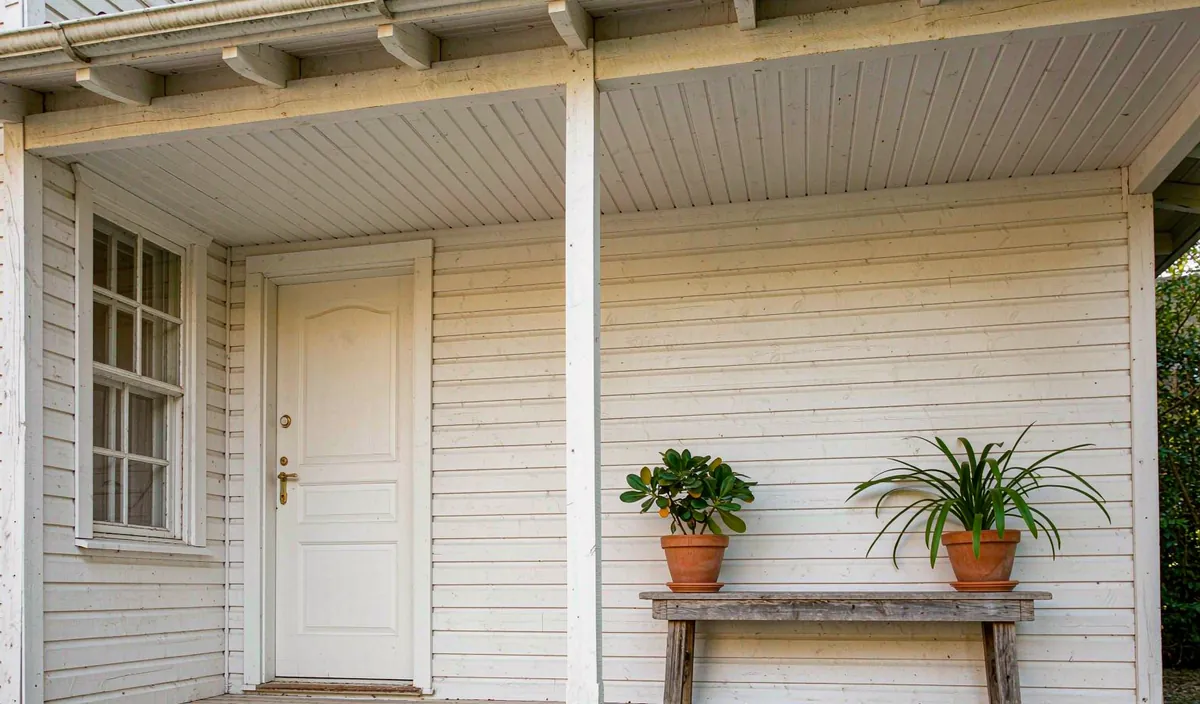
A small outdoor bench for the front porch
A porch bench does more than seat people. It holds what you are carrying when you reach the door.
That is what a small outdoor bench for the front porch is for. You set groceries down, dig for keys, sit to pull off wet boots. It gives the entry a place to happen.
The best spot is usually beside the door. Nobody walks into the back of it there, and the door still swings clear. On many porches that is the hinge side.
Leave 30 to 36 inches of open floor in front of the seat. That is your standing and turning room, and it keeps the swing of the door free.
Watch the door swing while you place it. A bench in the wrong spot turns a wide porch into a tight one.
Some porch benches come with a lower shelf or a second tier. That doubles what the bench holds without making it wider. The top is the seat, and the shelf below takes shoes and baskets.
There is a catch with that shelf. A low shelf close to the ground collects water and grit.
Look for one with slats or a gap at the back, so it drains and dries. A solid shelf just sits there wet.
A bench with a lid instead of a shelf is a storage bench, and the patio storage bench guide covers what to keep in one.
A porch cushion has to come in at night, or live in a box. A bare seat is the low-effort choice.
Depth matters on a porch, because a porch is often shallow. A 15-inch seat is the safer pick when the wall is close behind you. You give up the lean-back and you keep the walkway clear.
A bench and a planter on each end fill a porch wall like a set. The plants soften the wood and hide the legs.
The front step matters too. A bench beside a low step gives you a place to sit and tie a shoe.
Wood is the right call for a porch, covered or not. A wooden bench takes paint and stain, and it is the one you can sand back. The wood types guide ranks them for weather.
The honest version. On a covered porch, almost any wood lasts. On an open one, you want a rot-resistant wood and feet that lift it off the paving.
Balconies and rooftops
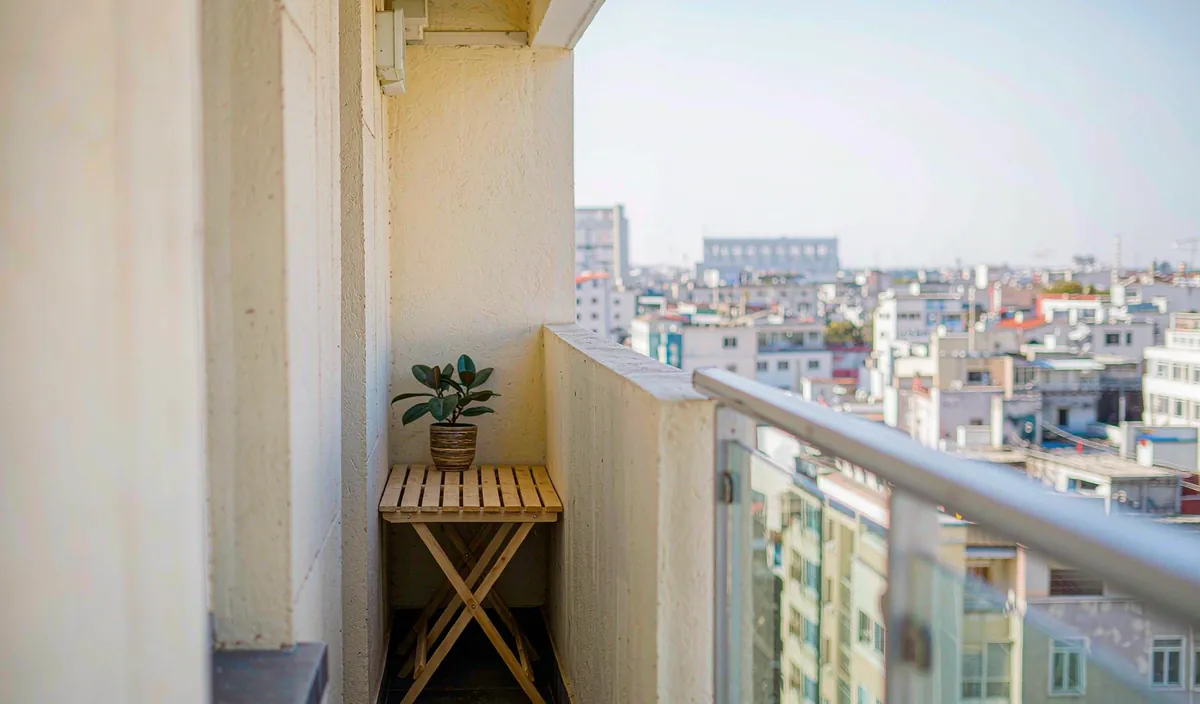
A balcony adds two rules that a yard does not have. Weight comes first, then wind.
Most balcony limits are about people, not a yard’s worth of furniture. A small bench suits them for that reason alone. It holds two people and adds almost no load.
Weight is also about getting it there. A balcony bench travels up stairs, around landings and through a door. Cedar is one of the lightest weather woods, and a small cedar bench is a one-person lift.
Check the elevator door before you buy a long bench for a small apartment. A bench that fits the balcony but not the elevator is no use.
Wind is the other rule. On an open balcony, a light bench can move in a strong gust. A wooden one is heavier and tends to stay put, or you can tuck it in against the wall.
Do not anchor a bench to the railing. That railing is doing a safety job. Fix into the wall or the floor slab if you fix it at all.
Rain on a balcony runs to the same corner every time. Put the bench where the water does not pool. Watch the floor after a storm before you settle on a spot.
Sun is the other thing to watch. A dark wood in full sun gets hot enough to matter. A light wood or a cushion fixes that.
Then keep the walkway clear. On a narrow balcony, a bench along the wall still leaves you a path. A bench across it can block the balcony off.
A bench that also holds a plant earns its space twice. The pot sits on the seat or on a low shelf.
Entryway and mudroom
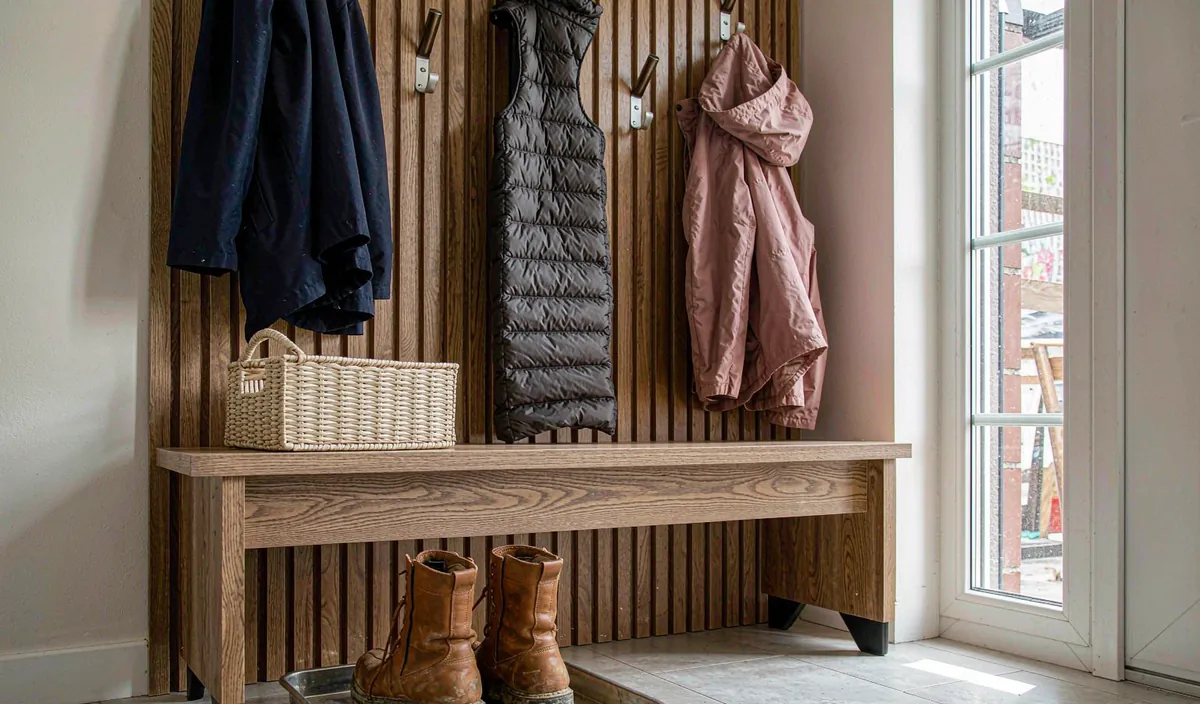
An entryway is a half-outdoor spot. It takes wet coats, dirty boots and a lot of drips.
An outside bench here is mostly about the seat, not the view. You sit to change shoes. You do not sit to look at anything.
Choose a wood that takes dirt. Oak and acacia handle marks better than a soft wood. A darker stain also hides scuffs that a pale finish would show.
Think hard about the cushion. A cushion in an entryway will get wet.
Use one with a removable, washable cover, or skip the cushion and sit on the wood. A bare slatted top dries and cleans fast.
The bench should not be the only thing by the door. Hooks above it hold the coats.
A tray under it takes the wet boots. Then nothing has to live on the floor.
Put a mat under the bench as well. The mat takes the worst of the water, and the wood stays drier.
A bench at the back door does the same job as one at the front. It catches the mud before it reaches the kitchen.
Designs that save space
Small benches are not just shorter. The good ones use a different shape. Four designs do the most with the least.
A bench with no back. This is the smallest thing you can sit on. Nothing sticks out behind it, so it sits closer to the wall. It also tucks under a window or a low rail.
A backless bench also takes less material. On a small bench, that shows in the price.
A shallow seat. Depth costs floor space, so a 15-inch seat saves some. A shallow bench is fine to sit on for a few minutes. Do not choose one for long afternoons.
A folding bench. A bench that folds flat against the wall is the smallest of all. It is also the least solid. It suits a spot you use twice a week, not one you use twice a day.
A bench on light legs can do the same trick. It is a seat by the door in winter, and extra seating on the deck in summer.
A bench that doubles as a table. Some small benches work as a low table with a tray on top. That earns the floor space back. It is a good pick for a balcony or a small deck.
Bench height is the catch here. A bench sits lower than a table for a reason. Use a tray, not a dinner plate.
A bench under a low window uses space you cannot stand in anyway. It reads as part of the wall, not as furniture.
One more idea, and it is free. Use a dead corner.
Two walls meeting at a right angle take a bench that would crowd a straight wall. A corner bench turns wasted floor into a seat.
Building a small wood bench in a day
A small bench is one of the few projects that fits in a single day. The boards are short, so the wood is cheap. You can build it from a few lengths and a box of screws.
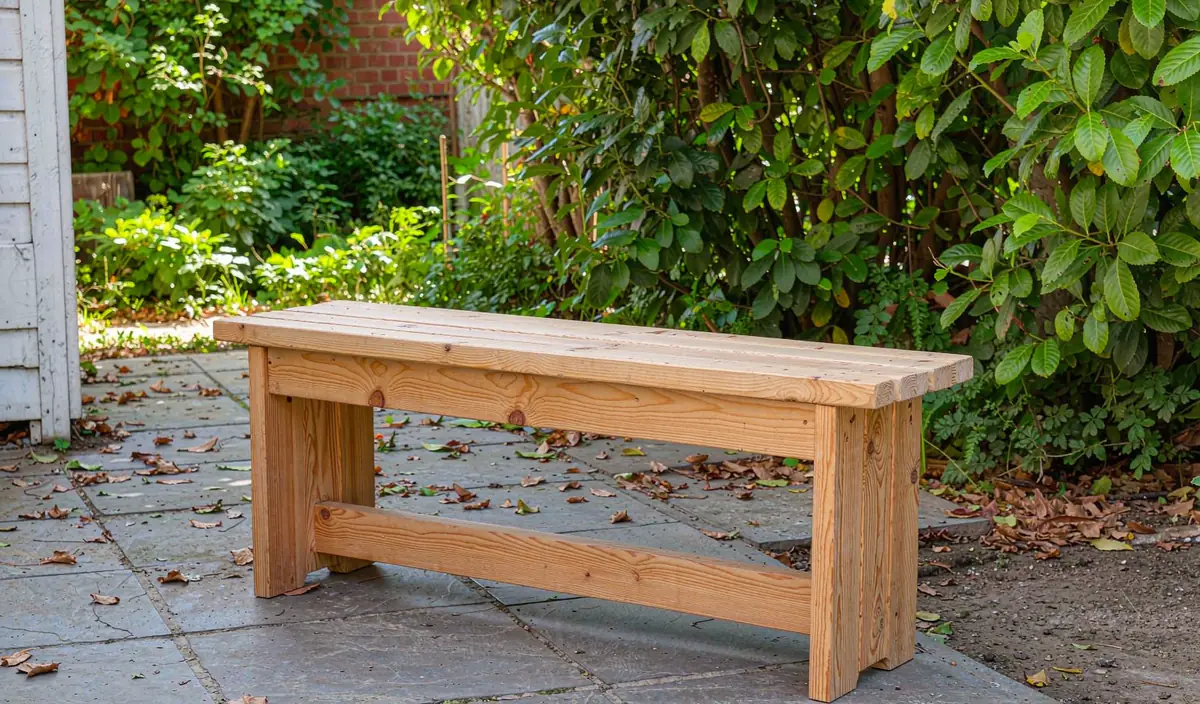
Keep the design simple. The strongest easy shape is a top, two end legs, and a brace at each end. Skip anything you cannot cut with one saw.
Start with the stock. A 36-inch bench needs three or four boards at about 36 inches long. A decking offcut or a shelf board works fine.
The cost is low. A small bench is one of the cheapest things you can build. One sheet or a few offcuts covers it.
You need a few tools and no more. A saw, a drill, a tape and a square will do it. A sander helps, but the job does not need one.
Work on a flat surface and check for a wobble before you screw anything down. A twisted bench never sits right.
Here is the build, in order.
Cut the top boards to length. Keep all the boards the same length.
Cut four legs to about 17 inches. Two legs at each end.
Screw a brace across each pair of legs. This is what stops the wobble.
Fix the top to the two braces. Drive the screws up from below.
Sand the edges and seal the wood. This is the last step before it goes outside.
An old headboard makes a shortcut. A headboard already has a back and two posts.
Cut the posts down and add a seat. You have a bench with less work than a plain one.
One thing about screws. Drive them into the face of the leg, not the cut end. Screws hold far better in the face grain, and the bench stays tight for years.
The legs are where small benches fail. A short bench has less length to spread the load. Give it a brace at each end and keep the span under about 40 inches.
The middle of the top is the weak point. Past about 40 inches, a plain top sags there. A third leg or a deeper brace fixes it.
Cut all the parts first, then dry-fit them. It takes ten minutes and saves a rebuild.
Wood picks for a small bench
Weight matters on a small bench more than on a big one. You move a small bench, and you carry it up steps. The wood you pick decides the weight and the life.
| Wood | Weight | Weathers | Best for |
|---|---|---|---|
| Cedar | Light | Well | Balconies, roof decks, a bench you move |
| White oak | Heavy | Well | Porches, entryways, a fixed spot |
| Teak | Heavy | Best | All-year outside, no cover |
| Acacia | Medium | Fair | A budget bench under cover |
Finish matters as much as the wood. Oil shows the grain and you redo it each year. Paint hides the grain and lasts longer between jobs.
Cedar is the light one, and it shrugs off weather and insects. It is the natural pick when the bench has to move. It is also soft, so it dents and marks.
Teak is the tough one. It lasts longer than anything else here, and it costs the most. It is also heavy, which counts against it on a balcony.
White oak sits between the two. It is tough and rot-resistant, and a small wood bench in oak is not one you carry far.
Sourcing is easy for a small bench. You do not need long boards. Mill offcuts and reclaimed wood often do the job.
For a bench that stays put, weight is not a problem. Pick for looks and for weather. For one you move, pick cedar and keep it small.
Questions people actually ask
What size counts as a small wooden bench?
Roughly 30 to 48 inches wide, with a seat 15 to 18 inches deep. Under 30 inches you have a stool, not a bench.
Is a bench with no back comfortable?
For a few minutes, yes. For an hour, a back helps. A backless bench is the better pick for a porch or an entryway.
What is the best wood for a small outdoor bench?
Cedar if you move it, white oak if it stays, teak if you want the longest life. The wood types guide compares the rest.
Can a small bench work in a garden as well as a porch?
Yes. The size changes, the siting logic does not. The garden bench guide covers where to put it.
How do I stop a balcony bench moving in the wind?
Add weight, not straps. A heavier wooden bench stays put where a light one shifts. Keep it against the wall, away from the open edge.
How heavy is a small wooden bench?
A cedar one is light enough for one person to carry. An oak or teak one takes two.
Can I leave a small bench outside all winter?
Yes, if the wood is rot-resistant and the feet lift it off the ground. Keep it off wet paving, covered or not.
Should I build or buy a small bench?
Build if you want a size that fits exactly and you have a day. Buy if you want it finished, sealed and load-tested. A first bench is a good build.
The short version
A small wooden bench earns its floor space. It seats two people and holds what is in your hands, in about the footprint of one chair.
Buy it for the seat and for the shelf by the door, not for the look. Keep the walkway clear, pick a wood that suits the weather, and seal the cut ends.
Done right, it is the seat you use most and think about least.