- Published on
Anchoring an Outdoor Bench: Wind, Tipping and Deck Boards
- Authors

- Name
- Outdoor Wooden Bench
A bench that moves is a bench that breaks
A bench rarely fails at the seat. It fails at the joint that takes the rocking.
Half an inch of slide each season adds up. The mortise opens, the bolt wallows out its hole, and the frame starts to rack.
Anchoring costs a few dollars and an hour. Most people skip it until a leg splits.
By then the repair costs more than the anchor ever would have.
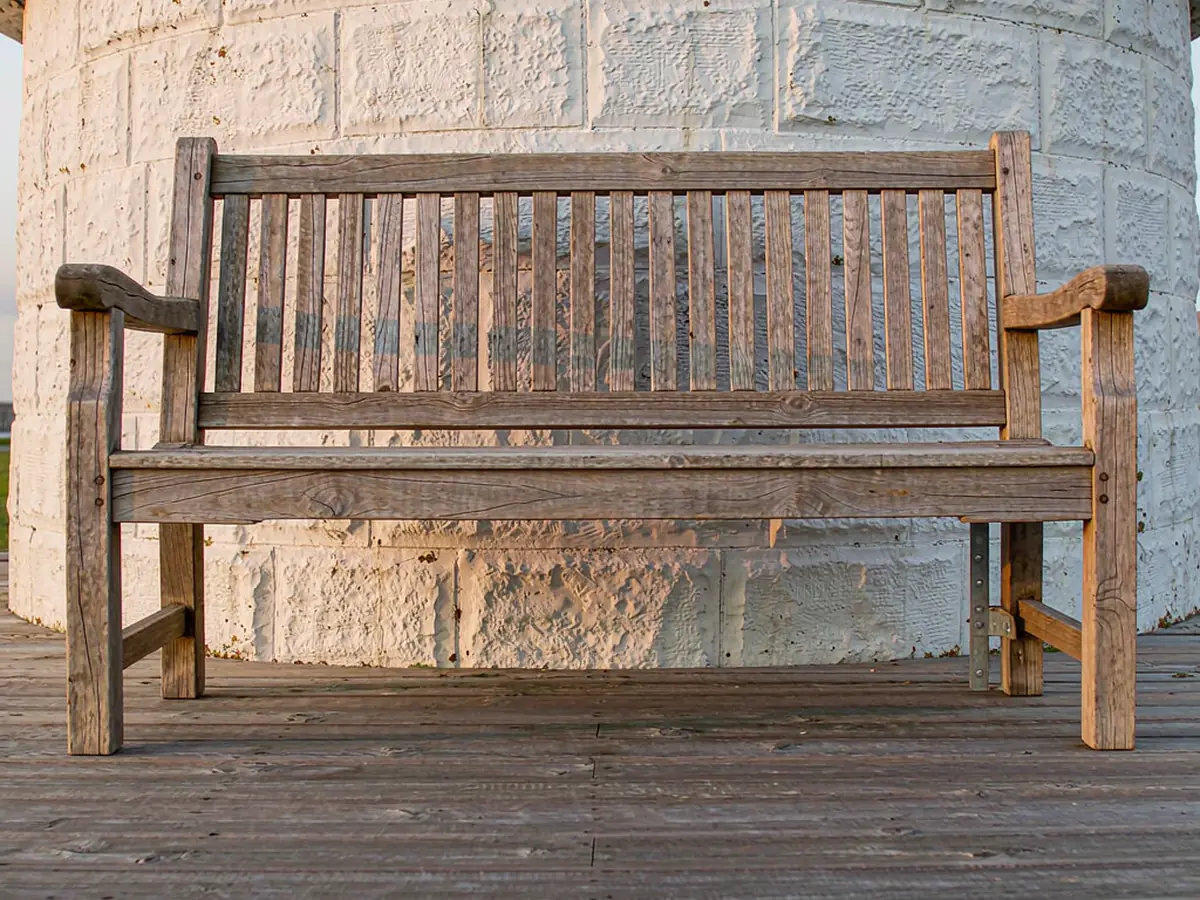
What tips a bench
Tipping is a ratio. The footprint has to beat the height of the load above it.
A backless bench sits low and deep. Someone leans over to tie a shoe and nothing happens.
A tall back moves weight behind the feet. A deep seat invites people to lean back into it.
Weight high up helps less than weight near the ground. A 60 pound bench with a tall back can still go over. A 25 pound slab of a bench stays flat.
Put that tall back on a light frame and you have the one shape that goes over. That bench needs a wider base or a bolt.
The thirty-second test
Push the top of the back with one hand. Use about the force of a tired person leaning.
Watch the front feet. If they lift off the deck, a child hanging on the back will tip the bench.
Then rock it side to side. A clunk means a loose joint, not a bad anchor.
Fix the joint first. The repair guide walks through a re-glue in an afternoon.
Read the surface first
Four surfaces hold a bench outdoors. A wood deck, a concrete slab, pavers on sand, and soil.
What sits under the legs decides the hardware. The bench itself decides almost nothing.
| Surface | What takes the load | Hardware | What fails first |
|---|---|---|---|
| Deck with a joist under the leg | The joist | Lag screw or through-bolt | The bolt crushes the decking |
| Deck with nothing under the leg | Add blocking, then the joist | 2x6 block plus lag screw | Decking alone, every time |
| Concrete slab | The slab | 3/8 inch wedge anchor | The slab cracks near an edge |
| Pavers on sand | The paver, spread over sand | Weight, no fastener | The paver rocks and the leg walks |
| Soil | A footing you pour | Ground screw or concrete | Frost lifts the whole bench |
Where the bench sits matters as much as what holds it. The patio guide covers layout and exposure.
The base comes before the bolt
A bolt ties a bench to the ground. A wider base stops the tipping, and most benches fail that test first.
The feet usually sit inside the seat line. Push a foot plate under each end and the footprint grows by 4 inches or more.
Cut a 1x6 to the width of a pair of legs and screw it under both feet. The bench now carries its load like a heavier one.
The same plate fixes a leg that sinks. A wide board spreads the weight over more ground, so the leg stops digging.
On a slope, level the bench before anything else. Shim the short leg with metal or a composite shim, never a wood offcut.
Wood shims soak up water and rot. The rock comes back by spring, and the rock is what racks a frame.
Deck boards are not structure
Decking runs 1 inch to 1.5 inches thick. A screw into that gets an inch of grip and no more.
Wind pulls up. A body leaning back pulls up too. A short screw in soft decking loses that fight.
The structure sits below the boards. Joists run under a deck, usually 16 inches on center.
Find a joist, or build a path down to one. A rim joist at the deck edge works too, and you can reach it from the side.
Deck screws hold decking to a joist. They snap under a sideways load, so keep them out of the anchor.
Blocking, the fix nobody mentions
Bench legs rarely land on joists. The odds run against it on most decks.
Drill through decking alone and you own a loose plate by August. The boards crush, the screw spins, and the leg walks.
Cut a 2x6 to fit between two joists. Screw it to both faces with structural screws, not deck screws.
A deck screw snaps under a sideways load. A structural screw bends and holds, and that block carries the bench.
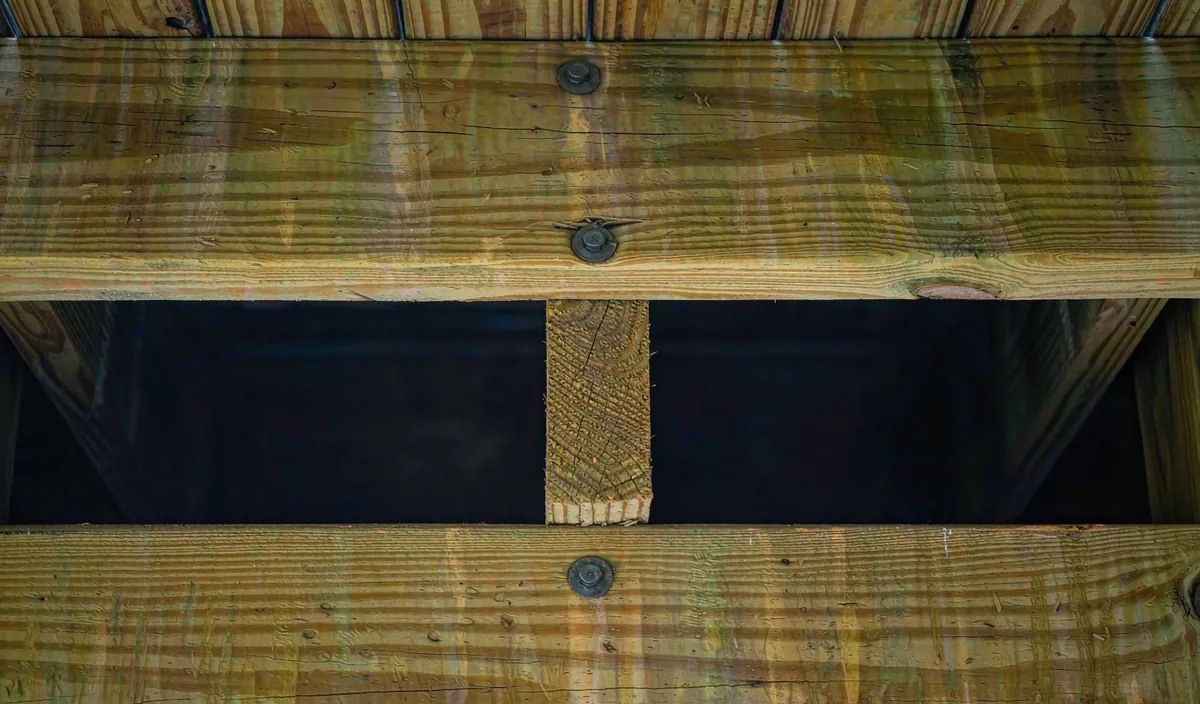
Now the leg has something solid under it. Do the work from below, or lift two boards and put them back.
A bench anchor kit will not solve this one. No fastener makes decking thicker than it is.
Four steps to a through-bolt
Mark through the bracket. Set the leg where it belongs, then drive a self-centering bit through the mounting hole.
Drill the pilot. Match the bit to the shank of the bolt, not the thread, and wrap tape at the depth you want.
Stack the washer. Put a washer against the wood, then the bracket, then a second washer under the nut.
Check it after a week. Wood compresses, so the nut loosens a turn or two. Snug it once and it holds.
Concrete: two anchors, two jobs
A wedge anchor holds a permanent load. A Tapcon screw holds a light one and backs out later.
For a wedge, drill a hole the same diameter as the anchor. Go the embedment depth plus half an inch, then blow the dust out.
A 3 inch slab is thin for a wedge. Under that, drop to a Tapcon screw or move the bench off the slab.
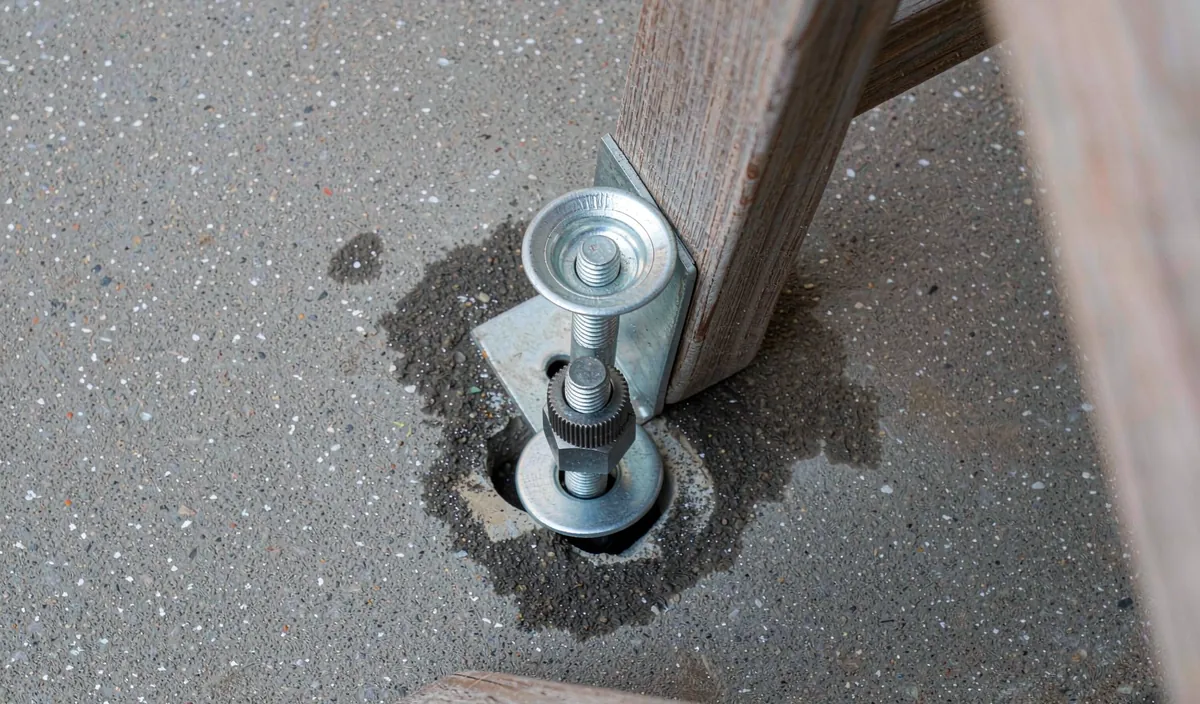
Dust left in the hole stops the wedge from gripping. A rubber bulb or a straw does the job.
A 1/4 inch Tapcon takes a 3/16 inch bit and a hammer drill. Let the drill do the work, not your arm.
Brick and block take a sleeve anchor, not a wedge. Hollow block needs a toggle bolt or epoxy, because the sleeve has nothing to press against.
Keep every anchor 3 inches from a slab edge. Old concrete cracks at the corner first.
Soil, gravel and lawn
A ground screw holds a bench down. It does nothing about tipping.
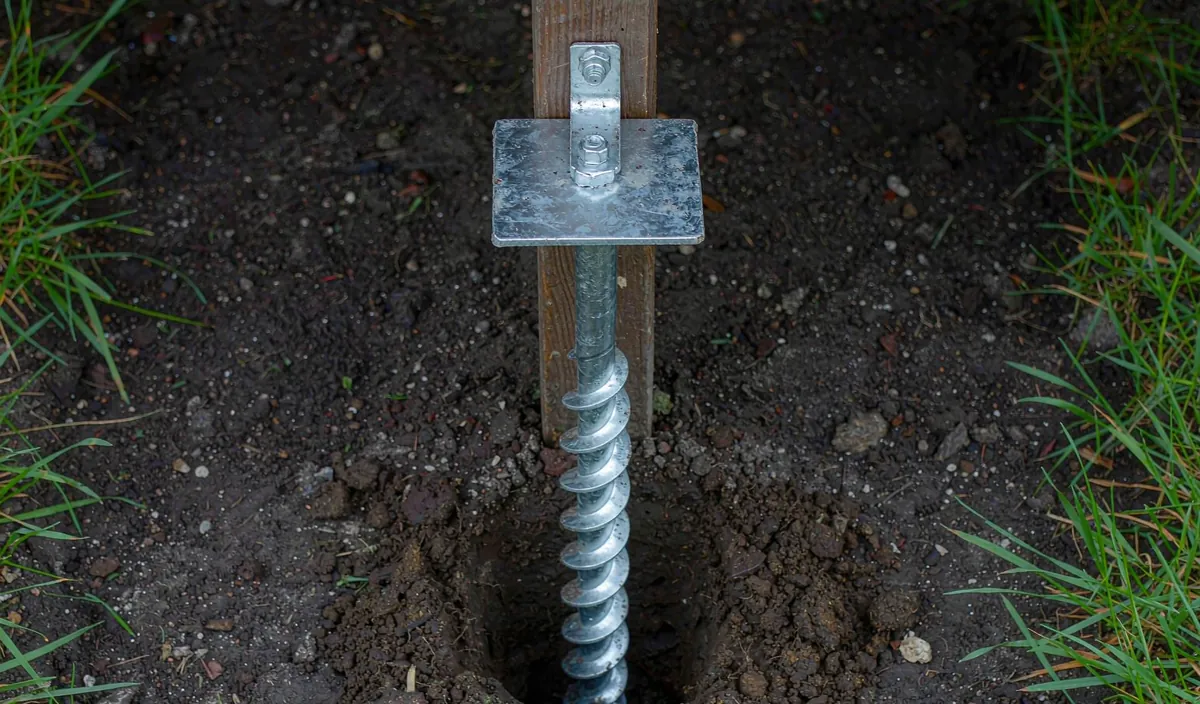
Pour a footing when you want both. Twelve inches wide, and deep enough to sit below the frost line.
Gravel and a paver stop the legs sinking into mud. That is the whole job they do.
On a lawn, most benches need a flat pad and a heavy base. Anchoring a light bench into soft ground buys nothing.
Weight, straps and the rental problem
Renting, or a deck that belongs to someone else. No holes.
Sandbags work. So does a weighted tray, or a concrete paver under each leg.
These stop sliding. They do not stop tipping, so pair them with a low back.
A strap to a structural post is fine. A strap to a railing is not, and the next section says why.
The railing is not an anchor
A guardrail takes a push at the top rail. That is the load it exists for.
A bench bolted to the posts pulls sideways at the bottom. Nobody sized those fasteners for that.
If the bench sits against a railing, bolt the legs to the deck. Leave the rail alone.
A balcony has its own rules
Wind at the fourth floor runs harder than wind in a garden. A balcony bench also has nowhere to slide to.
Most balcony slabs belong to the building. Drilling needs permission, and the holes need a plan for the day you move out.
Weight counts more up there. A 60 pound bench with two people on it is a load the slab edge never sees from a folding chair.
Keep the bench clear of the parapet. A parapet takes a push at the top, and a bench leaning on it pulls sideways.
When drilling is out, weight the base and pick a backless shape. The small bench guide covers the sizes that fit a balcony.
Wind, covers and the sail problem
A bare bench catches little wind. Wood is open, and air moves through the slats.
Put a cover on it and you have a sail. That is why covers end up in the hedge.
An anchored bench with a loose cover tears the cover. The anchor wins and the fabric loses.
Vents and a tight fit beat another strap. A cover that breathes spills wind before the seams give.
An open deck takes more wind than a sheltered corner. A bench against a wall sits in a lee, and a bench at the deck edge takes the full run.
Kids, knees and the climbing frame
A bench with a low back and a stout frame becomes a step. Children work that out fast.
Anchor that bench, and check the top for anything a small foot can hook.
A bench near a railing invites a climb over it. Move it a foot in from the rail and the game loses its point.
For older knees, a bench that slides while someone pushes up is worse than no bench. The dimensions guide covers the getting-up test.
Bolts, washers and the pull-through
A bolt head smaller than the bracket hole pulls straight through. The bolt stays and the leg walks away.
Use a washer at least an inch across. Stainless, with a nylon insert nut.
Through-bolt the leg if you can. A screw driven into end grain holds almost nothing.
| Anchor | Best for | Skip it when |
|---|---|---|
| Wedge anchor | A leg fixed to a concrete slab | The slab is under 3 inches thick, or heaving |
| Sleeve anchor | Brick and block, light loads | The hole is in hollow block with no backing |
| Tapcon screw | A light bench on sound concrete | The slab is old, cracked, or crumbling at the surface |
| Lag screw | A leg over a joist or blocking | You cannot confirm what sits under the decking |
| Ground screw | Holding a frame down on soil | You need to stop tipping, not sliding |
| Concrete footing | A bench that lives outdoors year round | Frost heave will lift it out of line |
When anchoring is the wrong answer
A slab that heaves with frost will crack around a wedge anchor. The anchor survives, the slab does not.
A bench you move with the sun does not want holes in the deck.
On a rented or historic deck, ask before drilling. Somebody owns that structure.
And if the joint is already loose, an anchor only holds a broken bench down. Fix the wood first, then decide about the bolt.
Undoing it in spring
Leave the anchors in place. Back the bolt out and plug the hole with silicone.
A wedge anchor does not come out cleanly. Cut it flush or leave it standing.
Write down where the holes are. Next winter takes five minutes.
Common questions
How do I stop a bench from blowing over?
Weight low and a wide footprint do more than any strap. A bare bench rarely moves in wind. A covered one acts like a sail, so vent the cover or take it off.
Do I need to anchor a bench on a concrete patio?
Usually not. A bench over 40 pounds with a modest back holds its own. Anchor it if children climb on it, or if people push off the back as they stand.
Can I anchor into deck boards without hitting a joist?
Not safely. Decking runs 1 inch to 1.5 inches thick, and a screw that short pulls out. Add blocking between the joists instead.
What size wedge anchor should I use?
A 3/8 inch anchor suits most bench legs. It needs about 2-1/2 inches of concrete under the surface, so check the slab thickness first.
Will anchoring crack my patio slab?
Only near an edge or over a crack. Keep anchors 3 inches in from any edge, and skip a spot where the slab already moves underfoot.
How do I anchor a bench on grass?
Pour a small footing, or set the legs on paving and use a ground screw for the frame. A ground screw alone stops the bench sliding, not tipping.
Do I need a bench anchor kit?
Sometimes. A kit gives you brackets, bolts and washers in one bag. What it cannot tell you is what sits under the leg.
Can I anchor a bench to a railing?
No. A guardrail takes a push at the top, and a bench pulls sideways at the bottom. Those two loads pull in different directions.
What if I rent and cannot drill?
Weighted trays, sandbags, and a paver under each leg. Pick a bench with a low back, so tipping stays unlikely without a bolt.
Does a heavy bench need anchors?
Rarely, if it weighs over 40 pounds and the base runs wider than the seat is deep. Test the front feet before you decide.
How deep should a footing go?
Below the frost line for your area, and 12 inches across. In a mild climate, 18 inches deep carries a bench.
How do I remove an anchor?
Back the bolt out and leave the sleeve. A wedge anchor will not come out whole, so cut it flush with the slab.
Should I anchor before or after painting?
After. Paint the bench first and let it cure, then drill. A bolt head takes paint badly anyway.
The short version
Read the surface. Find the structure under it. Use a washer.
That covers most benches, and the rest is judgement about children and rental decks.
If the bench rocks, fix the joint before you drill. A bolt into a racked frame just holds the damage steady.